
The secret to staying consistent is training that feels meaningful, measurable, and surprisingly fun even on hard days.
Brazilian jiu jitsu has a way of changing your relationship with motivation. Not the hype-y, short-lived kind that shows up on January 1st and disappears by mid-month, but the kind that keeps you coming back after a long workday, after a stressful week, and even after you have had a rough round on the mat.
We see it all the time in our classes here in Simi Valley. You start for one reason, maybe fitness or stress relief, maybe self-defense, maybe you just want something that is not another treadmill session. Then, a few weeks in, something clicks. You begin to care about small improvements: better balance, calmer breathing, smarter decisions. That is where lasting motivation is born, and research is starting to explain why.
Why brazilian jiu jitsu keeps you motivated when most fitness plans fade
A big reason people quit exercise is that progress feels fuzzy. With brazilian jiu jitsu, progress is obvious. It shows up in real moments: you escape a position that used to trap you, you remember a detail under pressure, you stay composed instead of panicking. Those moments feel earned, and that matters.
Studies on BJJ motivation consistently point to intrinsic drivers, especially enjoyment and competence. In other words, people stick with what they actually like doing and what makes them feel capable. That might sound simple, but it is powerful. When you are engaged and learning, motivation stops being something you force and starts being something you build.
We structure our training so you can feel that competence growing. You are not guessing what to do each day. Our classes are designed to give you repeatable themes, clear goals, and enough live practice to make the techniques real.
The psychology behind lasting drive: intrinsic motivation, not just willpower
Motivation is not only discipline. It is also design. When the activity gives you feedback, challenge, and a sense of control, you naturally want to return. BJJ fits that model beautifully, and the research backs it up. A 2023 study on BJJ participants found intrinsic motives like interest and enjoyment rank higher than appearance or social status motives. Fitness and skill competence also rate as strong drivers, especially for people who train seriously.
That matches what you can feel on the mat. You are solving problems with your body and your brain at the same time. You get to be curious. You get to experiment. And you get immediate feedback from a resisting partner, which is honestly rare in most workouts.
We also try to keep training autonomy-friendly. You will always have structure, but you still get room to explore the positions you are working on, ask questions, and build a game that fits your body type and goals.
Motivation that lasts because the goals are built in
One underrated feature of brazilian jiu jitsu is that it gives you a long runway. You do not “finish” it. There is always another layer: timing, setups, transitions, counters, defense, top control, bottom control. That depth creates motivation through mastery.
The belt system helps too, not because belts are magical, but because they organize the journey. You do not need to invent goals from scratch. You can focus on the next achievable milestone while still training for the long term.
We keep promotions tied to consistent skill development and mat behavior, not just a single flashy moment. That gives you a stable target: show up, train with intention, improve your fundamentals, become a better partner, and the recognition comes naturally.
Resilience and mental toughness: what long-term training actually builds
A 2024 peer-reviewed study on rank-based psychological characteristics in BJJ found that more experienced practitioners tend to show higher mental strength, resilience, grit, self-efficacy, self-control, and life satisfaction compared to beginners. That is not saying beginners lack these traits. It is saying the training environment helps cultivate them over time.
We see that transformation happen in normal, everyday ways. You learn to stay calm in uncomfortable positions. You learn that tapping is not failure, it is feedback. You learn how to make small adjustments instead of quitting when something gets hard.
Those lessons transfer off the mats. People often tell us they handle work stress differently after a few months of consistent training. Not because life becomes easy, but because you get practiced at staying steady when pressure shows up.
The “physical chess” effect: why BJJ feels mentally satisfying
There is a reason brazilian jiu jitsu gets compared to chess. Each round is a series of decisions: grip choices, angle changes, weight shifts, timing. Even when you are tired, your brain is engaged. That engagement is a motivation engine all by itself.
If you have ever been bored at a gym, you understand this immediately. The mat does not let you drift. You are present. You are problem-solving. And when you solve the problem, it is deeply satisfying.
We build classes around that idea. Technique is taught with context, not just moves. We focus on what you should feel, what your partner is likely to do next, and how to adapt when the situation changes.
Stress relief that is more than “just a workout”
Many people come to us looking for stress relief, and we get it. Life in Simi Valley can be busy: commuting, family schedules, work demands, the constant feeling that your brain is never fully off. BJJ helps because it demands attention. When you are sparring, you cannot multitask. Your mind gets a break from everything else, in a productive way.
Training also supports mood through physical exertion and the natural chemistry of exercise, including endorphin release and stress hormone regulation. A 2024 paper on lifelong skills in BJJ reported extremely high rates of improved mood and reduced anxiety among adult participants, along with stronger commitment and mental flexibility.
We try to keep the room supportive and respectful so the stress relief is real, not chaotic. Hard training is fine. Ego-driven training is not. You should leave class tired, clear-headed, and a little proud of yourself.
Community as the quiet force that keeps you showing up
Motivation gets fragile when you do everything alone. One of the most striking data points in the lifelong skills research is that participants reported a strong sense of community at extremely high rates. That aligns with what we see: people stay consistent when they feel connected.
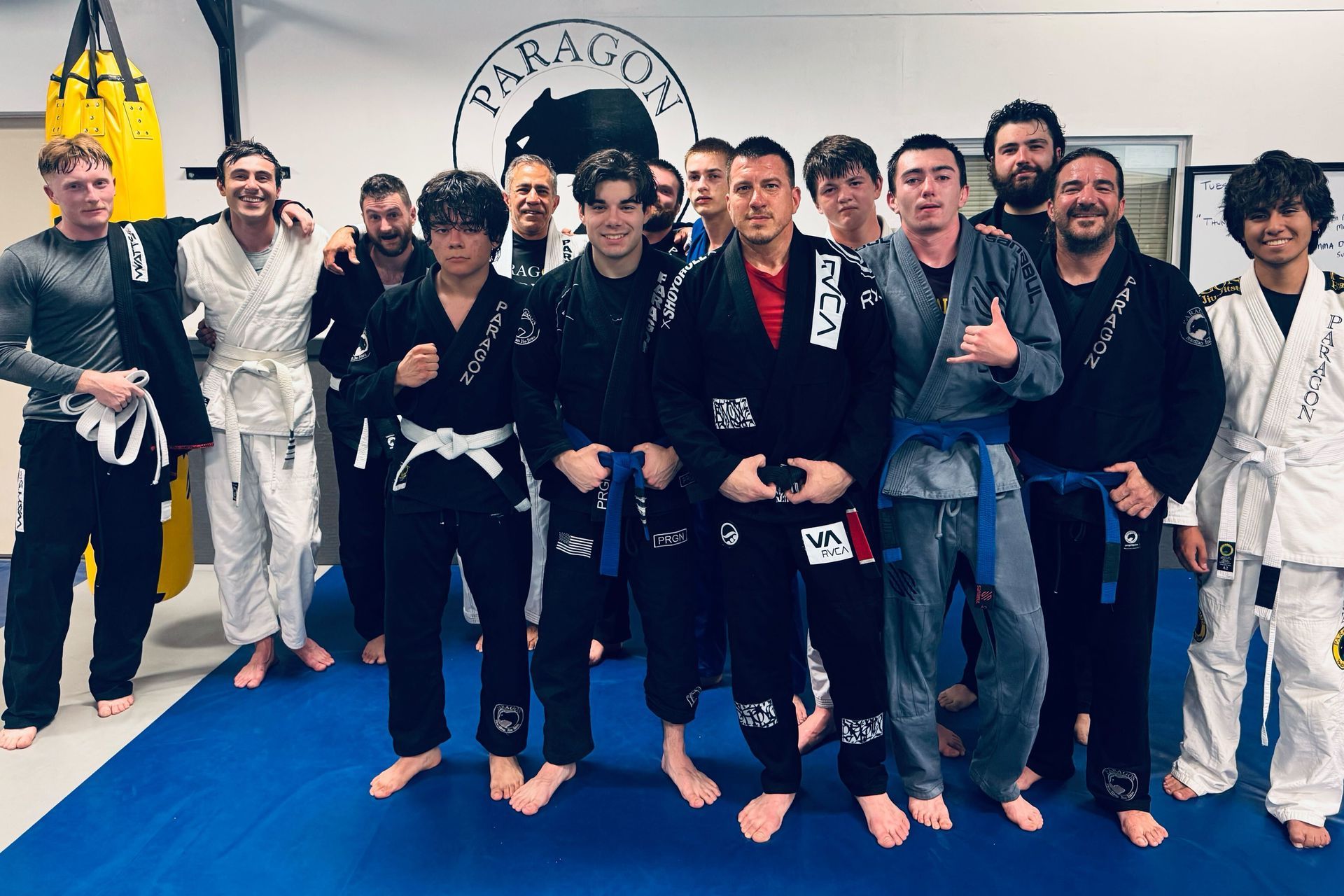
In practice, community looks simple. You recognize faces. You get welcomed back when you miss a week. You have training partners who notice your progress. And you have a shared culture where the work is hard, but the vibe is supportive.
We coach you to be a good training partner as part of learning the art. That means control, communication, and respect. When that becomes normal, the academy turns into a place you actually want to be, not a place you force yourself to visit.
What your first 90 days can look like (and why it builds momentum)
If you are new, the first few weeks can feel like drinking from a firehose. That is normal. The trick is to focus on consistency over intensity. Motivation grows fastest when you collect small wins.
Here is a realistic 90-day path we often see when you train 2 to 3 times per week:
1. Weeks 1 to 2: You learn basic positions, safety rules, and how to move with control, even if you feel awkward.
2. Weeks 3 to 6: You start recognizing patterns, surviving longer in live rounds, and remembering a few “go-to” escapes.
3. Weeks 7 to 10: Your conditioning improves, your breathing calms down, and you begin linking techniques together.
4. Weeks 11 to 13: You notice real confidence changes, not loud confidence, but quiet confidence that shows up in posture and decision-making.
The motivation boost comes from that steady proof: you are improving because you are showing up.
How we keep training safe, structured, and sustainable
Safety is not luck. It is culture, coaching, and smart training design. We emphasize controlled rounds, clear tapping expectations, and partner awareness. You do not need to “win practice.” You need to train in a way that you can repeat next week.
A sustainable approach also means scaling intensity. Some days you go hard, some days you train technical and light, and some days you focus on drilling. That variety supports long-term progress and helps prevent burnout.
When you are consistent, benefits accumulate. Research suggests the psychological benefits increase over years of training, and that long runway is exactly why BJJ can become a lifelong practice instead of a short phase.
FAQ: honest answers we hear from Simi Valley beginners
Am I too old or out of shape to start?
No. You can start where you are. BJJ rewards technique and consistency, and we help you scale your training to your current fitness level.
Is it safe for kids and teens?
With structured coaching and a respectful culture, BJJ can be an excellent youth activity. Research on lifelong skills reports improvements in confidence, mood, anxiety reduction, and commitment that map well to youth development.
How often should I train?
If you want momentum without burning out, 2 to 3 times per week is a strong target for most adults. It is enough repetition to learn and enough recovery to stay consistent.
How long does it take to see progress?
You can feel progress in the first month, usually through better movement, improved cardio, and increased comfort in positions. Belt promotions take longer, but day-to-day confidence and mood shifts often show up much sooner.
Start Your Journey with Paragon Simi Valley
If you want motivation that lasts, we recommend choosing a practice that rewards effort with real skill, real community, and real personal growth. That is exactly what we build through brazilian jiu jitsu at Paragon Simi Valley, and it is why so many students stick with it long after the “new hobby” phase would normally fade.
When you are ready, we will help you start in a way that feels approachable and sustainable. You do not need to be in perfect shape or have experience. You just need a willingness to learn, and we will take it from there at Paragon Simi Valley.
Put what you learned here into practice on the mat by joining a free Brazilian Jiu-Jitsu trial class at Paragon Simi Valley.