
This is a subtitle for your new post
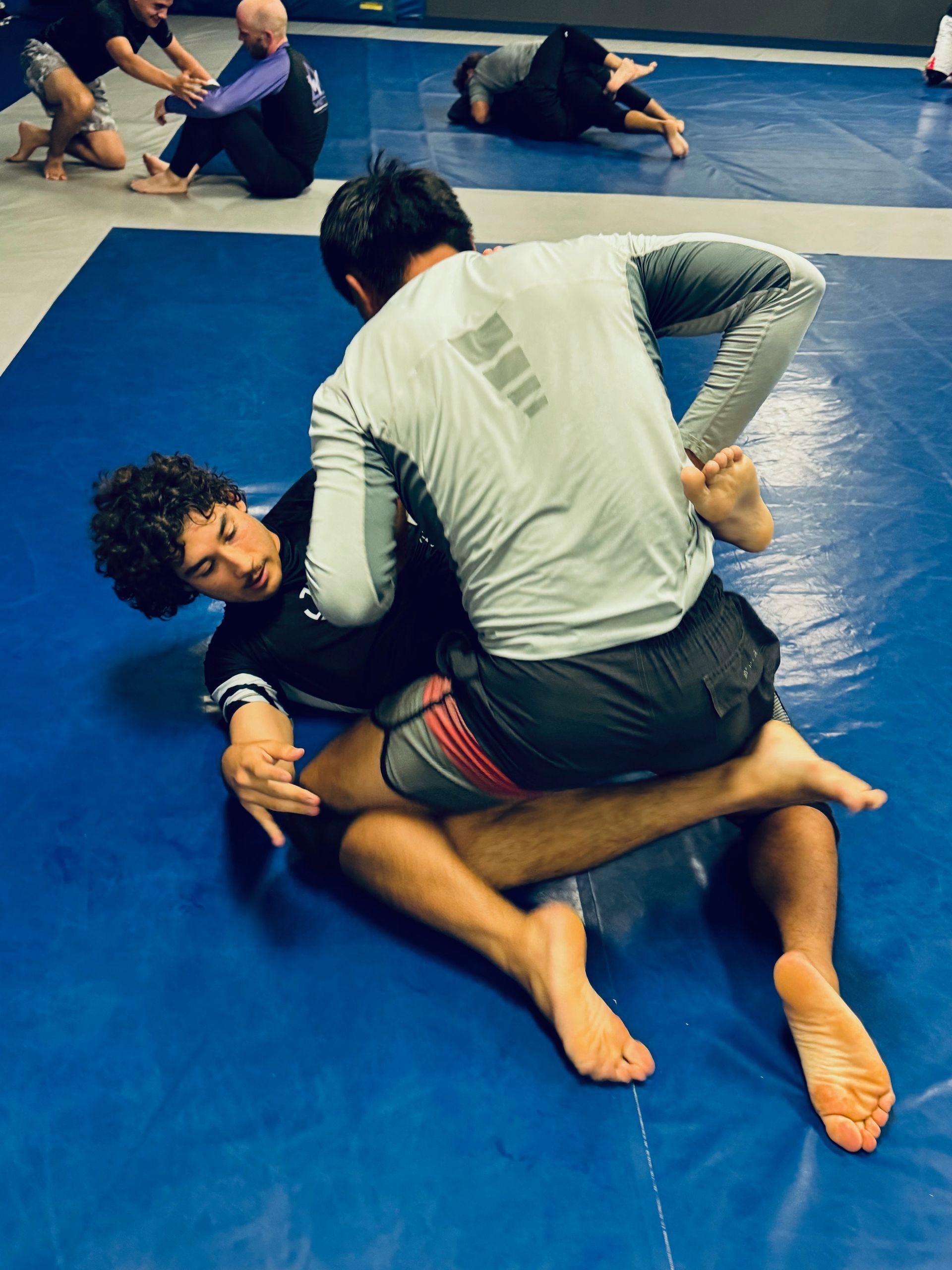
Mental toughness is not something you either have or do not have, it is something you can practice on the mats.
Brazilian jiu jitsu looks physical on the surface, but the longer you train, the more you notice how much of it is mental. You learn to stay calm in uncomfortable positions, make decisions while tired, and keep showing up even when progress feels slow. That is why so many people in our community start training for fitness or self defense and then stick with it for the mindset.
In Simi Valley, a lot of us juggle work, commuting, family schedules, and the general mental noise that comes with modern life. We built our classes to be a structured reset: you walk in, focus on a clear task, and leave feeling like you handled something hard on purpose. Over time, that habit changes how you handle pressure everywhere else.
What the Research Says About Brazilian Jiu Jitsu and Mental Toughness
When people talk about mental toughness, they often mean grit, resilience, and self control, the ability to keep going, adapt, and make good choices under stress. Research on brazilian jiu jitsu is increasingly pointing in that direction, showing measurable mental and emotional benefits, especially with consistent training.
One of the clearest patterns is that experience matters. Studies comparing ranks have found that advanced practitioners tend to score higher in mental strength, resilience, self efficacy, self control, and life satisfaction, along with fewer reported mental health disorders compared with beginners. That does not mean you need to be advanced to benefit. It means the longer you train, the more the mental skill set compounds.
Researchers also describe BJJ as a psychosocial support system, not just a sport. Participants commonly report improved confidence, commitment, mental flexibility, and a strong sense of belonging. That community element matters because social support is tied to better mental health outcomes and better follow through on goals.
There is also promising work around trauma and high stress populations. Studies and reviews involving veterans and first responders have reported clinically meaningful improvements in PTSD related markers, along with reductions in anxiety, depression, and even alcohol intake in some groups. We are not a clinic, and training is not medical treatment, but it is hard to ignore how often people describe the mats as the first place in the week where their nervous system finally downshifts.
Finally, a concern we hear a lot is aggression. Research suggests experienced practitioners typically show equal or lower harmful aggression than newer students, and higher self control. The short version is that learning to manage intensity, tap, reset, and respect partners trains restraint, not recklessness.
How Brazilian Jiu Jitsu Builds Mental Toughness, Step by Step
Mental toughness is built through repetition under the right level of pressure. Brazilian jiu jitsu is unusually good at that because it combines problem solving, controlled resistance, and a clear long term progression. You are not just learning moves, you are learning how to behave when things are not going your way.
Controlled stress that teaches you to stay calm
In a typical class, you will end up in positions that feel uncomfortable, pinned, squeezed, or simply confusing. The key is that it is controlled. You can tap, your partner can ease up, and we can dial the intensity to match your experience.
That controlled stress is where the mental adaptation happens. You learn to breathe instead of panic, to frame and escape instead of freezing, and to think in small steps. Over time, your brain starts treating pressure as information rather than danger. That carries over when you are stuck in traffic on the way home or dealing with a tense conversation at work.
Problem solving under fatigue
BJJ is often described as physical chess, but it is more like chess while someone is trying to steal your pieces and you are tired. The fatigue is not a downside, it is part of the training effect. You learn to make decisions when you do not feel sharp.
This is one reason people report better mental clarity over time. You get used to staying engaged even when you are uncomfortable, and that builds a kind of practical resilience. It is not motivational poster resilience. It is the ability to keep doing the next right thing.
The belt system rewards consistency, not hype
Mental toughness is mostly consistency. The belt progression in brazilian jiu jitsu is long by design, and that is a feature, not a flaw. You are rewarded for showing up, learning details, asking questions, and sticking with fundamentals.
We coach you to focus on process goals, not just outcomes. Instead of obsessing over winning a round, we will track things like escaping a bad position with better timing, controlling breathing, or executing one clean sequence. That mindset, focusing on what you can control, is a core component of mental toughness.
Losing safely teaches emotional control
You will tap. Everyone taps. The tap is not a failure, it is feedback, and it also builds humility in a healthy way. When you learn to lose without spiraling, you learn emotional regulation.
That is a big deal for adults and kids alike. For adults, it can mean fewer ego driven reactions in daily life. For kids and teens, it can mean learning frustration tolerance, listening skills, and respect without us needing to lecture for twenty minutes. The mats teach it quickly.
Why Mental Toughness Through BJJ Matters in Simi Valley
We love Simi Valley, but the pace can be deceptive. People are busy. Many households run on tight schedules. Some residents commute into Greater Los Angeles. Others work demanding local jobs where stress comes home with you.
BJJ in Simi Valley gives you a place to practice being steady when life is not. You get a consistent routine, a community that notices when you show up, and a skill that improves in measurable ways over time. That combination is rare.
For commuters and busy professionals: a structured mental reset
A good class forces focus. You cannot scroll your phone while someone is passing your guard. You have one job: pay attention, breathe, and solve the problem in front of you.
Students often tell us that training becomes the boundary between work mode and home mode. You walk in carrying the day, and you walk out feeling more settled. That is not magic. It is physiology, movement, and attention training stacked together.
For first responders, healthcare workers, and veterans: pressure training with community
Ventura County has many families connected to military service and public safety work. Research specifically highlights BJJ for these populations because it combines decision making under stress with physical exertion and a supportive social environment.
In our training, you practice staying composed while someone is applying real pressure, then you reset and do it again. That cycle is a powerful way to build confidence and self control. It is also a place where you do not have to explain everything. You can just train, laugh a little between rounds, and get back to work.
For kids and teens: confidence without aggression
Parents often worry that martial arts will make kids more aggressive. What we see, and what the research supports, is that consistent training tends to improve self control and reduce problematic behavior. Studies on youth programs have shown reductions in emotional symptoms, hyperactivity and inattention, and externalizing behaviors after a short training period.
In practical terms, kids learn to listen, wait their turn, try again, and deal with frustration in a structured environment. They also get a screen free space where effort is rewarded and respect is expected.
What You Can Expect in the First Month
Starting something new takes mental energy. Your first month of brazilian jiu jitsu will feel like learning a new language with your body. That is normal. We keep beginners in a clear structure so you are not guessing what to do every minute.
Here is what most students notice early on:
• Your mind feels tired in a good way because you are learning positions, grips, and timing, not just working out
• You start to recognize patterns like how to escape side control or what to do when someone grabs your collar
• You experience controlled discomfort and learn that you can stay calm inside it
• You leave class with a sense of progress, even if it is small and a little messy
• You begin building training relationships that create accountability and motivation
If you are worried about being out of shape, do not wait to be ready. Getting in shape is part of the process, and we scale intensity so you can build up without feeling thrown into the deep end.
How We Structure Training to Build Resilience Without Burning You Out
Mental toughness is not about smashing yourself into the ground. It is about progressive challenge with recovery, coaching, and safety. Our classes follow a structure that supports that.
We start with skill work so you have tools before you face resistance. We add positional training where the goal is specific, like escaping mount, instead of chaotic sparring. Then, when you are ready, we include live rounds that are controlled and matched by size and experience as much as possible.
We also coach a culture of tapping early and tapping often. That makes training safer physically, and it also makes it safer mentally. When you trust the room, you can challenge yourself without feeling trapped. That trust is a big part of why BJJ in Simi Valley can become a long term practice rather than a short burst of motivation.
FAQs About BJJ and Mental Toughness in Simi Valley
How does training help with stress, anxiety, or burnout?
BJJ gives you intense focus, full body movement, and a clear problem to solve. Research links training to reductions in stress and anxiety and improvements in mood and resilience. Many students feel a difference within a few weeks, especially when training two to three times per week.
Will this make me or my child more aggressive?
The opposite is more common. As skill increases, self control tends to increase too, and research shows no increase in harmful aggression among experienced practitioners. We emphasize respect, safe training, and emotional control as part of everyday practice.
Can it help my child focus at school?
It can. Youth studies have shown improvements in attention related issues and reductions in behavioral difficulties after structured training. We reinforce listening, persistence, and calm responses to frustration, which supports focus outside the academy.
Is it safe for beginners and women?
BJJ is scalable. We start with fundamentals, partner matching, and clear rules around control and tapping. You do not need to be strong or experienced to start, and you do not need to prove anything on day one.
How long before I see real mental benefits?
Some benefits, like stress relief and improved sleep, can show up quickly. Deeper mental toughness builds over months as you accumulate reps under pressure. If you want a simple target, commit to eight to twelve weeks and track how you handle challenges at work and home.
Take the Next Step
If you are looking for brazilian jiu jitsu in Simi Valley that develops real mental toughness, our goal is to give you a training environment where pressure becomes productive. You will learn how to stay calm, think clearly, and keep showing up, and those skills do not stay on the mats.
At Paragon Simi Valley, we keep the path straightforward: fundamentals first, smart intensity, and a community that supports long term growth. When you are ready, we would love to help you start building that resilience one class at a time.
Strengthen both body and mind with consistent Brazilian Jiu-Jitsu training by joining a free trial class at Paragon Simi Valley.