
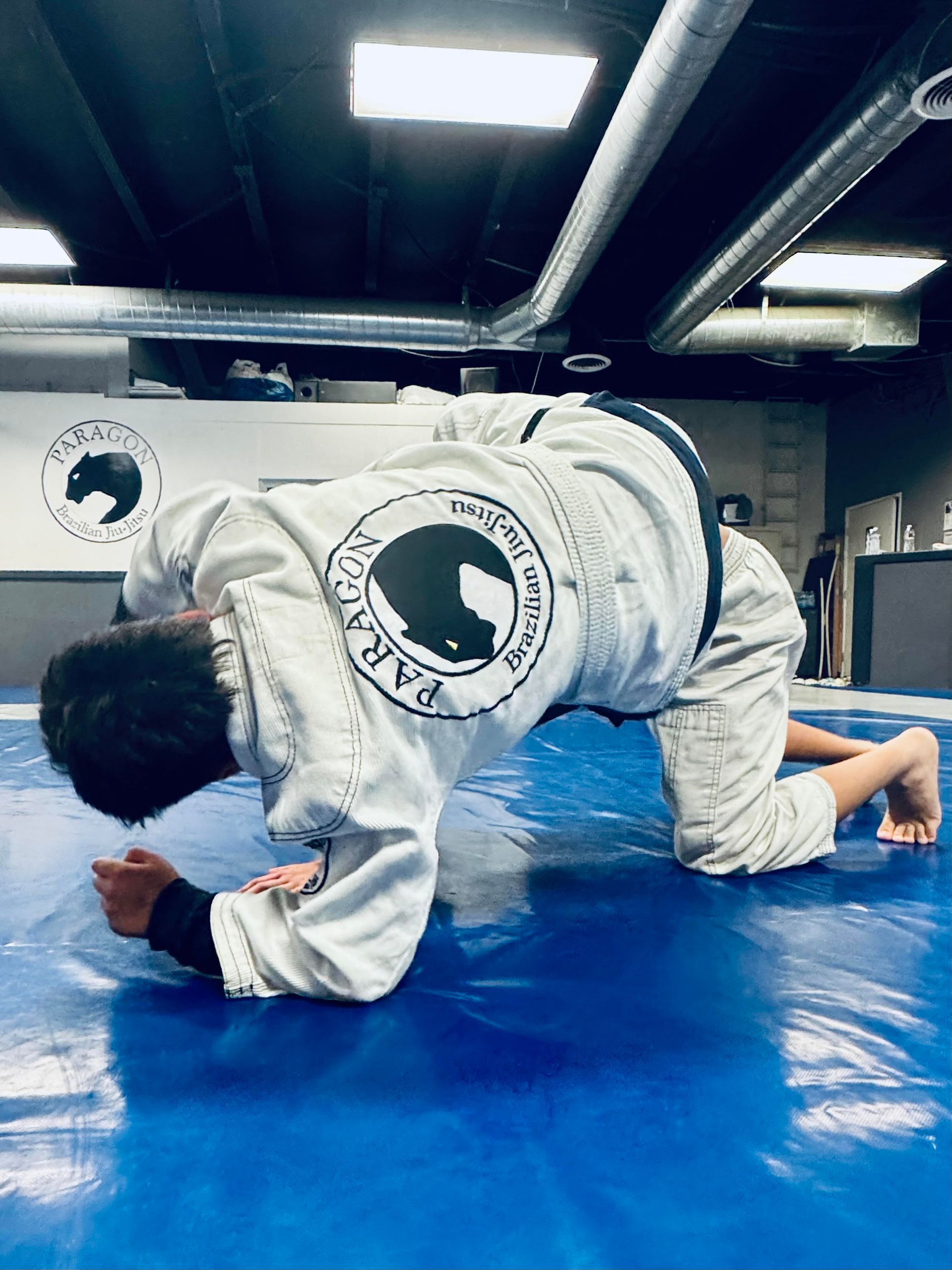
Your blue belt is not a finish line, but it is proof that your training has started to change how you move, think, and respond.
Brazilian jiu jitsu has a funny way of humbling you on day one and quietly rebuilding you over the months that follow. We see it all the time: you walk in expecting to “learn a few moves,” and you end up learning how to stay calm under pressure, how to problem-solve with your whole body, and how to keep showing up even when something feels hard.
It also happens to be one of the fastest-growing combat sports in America, with search interest more than doubling from 2004 to 2024. That popularity makes sense when you experience it firsthand. Brazilian jiu jitsu gives you measurable progress, real skills, and a community that makes consistency easier.
If you are curious about what it actually takes to go from brand-new to blue belt, we want to make the path clear. Below, we break down what you will learn, how long it typically takes, what training feels like at each stage, and how to keep your momentum when life gets busy.
Why the white-to-blue journey matters in Brazilian jiu jitsu
A blue belt is the first rank that tends to feel “real” to beginners, mostly because you have to earn it through time on the mat. Across the sport, the average time to blue belt is about 2.3 years with consistent training, and that tracks with what we see when students train two to three times per week and stay focused on fundamentals.
But the bigger reason the white-to-blue journey matters is that it is where your habits form. You learn how to warm up properly, how to drill without rushing, how to tap early, and how to train with different body types safely. Those are not glamorous skills, but they are the ones that keep you improving.
Your goal in this phase is not to collect techniques. Your goal is to build a usable game based on posture, frames, escapes, and control. That is the foundation that makes everything else work.
What to expect in your first month (and why it feels awkward)
Most beginners feel a little lost in the first few classes. The terminology is new, the pace feels fast, and even simple movements like shrimping or bridging can feel oddly specific. That is normal. We structure early training so you are learning the “why” behind the movements, not just copying shapes.
In the first month, you should expect a mix of:
- Fundamental movement drills to build coordination and mat awareness
- Core positions like guard, side control, mount, and back control
- Basic escapes that prioritize safety and breathing
- Light positional sparring where you start from a set scenario
One of the first mindset shifts in Brazilian jiu jitsu is realizing you do not need to win practice. You need to understand the position you are in, protect yourself intelligently, and make one good decision at a time.
The core skills that take you from novice to competent
There is a reason experienced grapplers keep talking about basics. At white belt, “basic” does not mean easy, it means essential. When you are tired, when you are pinned, when someone is heavier or faster, the basics are what show up.
Escapes: the confidence builder you can feel quickly
Escapes are often the first thing that makes a beginner feel capable. Once you can get out of mount or side control reliably, sparring becomes less stressful. You stop feeling trapped and start feeling curious, which is a huge difference.
We emphasize:
- Framing to create space without burning energy
- Hip movement to recover guard or get to your knees
- Timing, so you move when your partner’s weight shifts
- Safety habits like protecting your neck and tapping early
Guard: learning to attack while you are on your back
Guard is one of the most unique features of Brazilian jiu jitsu. Instead of treating the bottom as “bad,” you learn to make it active. Early guard work is less about fancy submissions and more about controlling distance, breaking posture, and setting up sweeps.
You will spend a lot of time on:
- Closed guard and how to keep posture broken
- Open guard distance management with feet and grips
- Sweeps that put you on top without a scramble
- Re-guarding when your guard starts to slip
Passing and top control: turning position into progress
If guard is learning to solve problems from underneath, passing is learning to solve problems from above. Passing is also where patience starts to matter. Beginners often try to sprint through a pass. We teach you to slow down, clear frames, and move step by step.
Top control also teaches something subtle: how to apply pressure without muscling. When you control someone with good structure, your energy stays steady, and your partner feels like the mat got heavier.
A practical timeline to blue belt (what progress often looks like)
Every student is different, but most successful blue-belt tracks share a familiar rhythm. The biggest factor is consistency. Two to three classes per week beats a short burst of daily training that disappears after a month.
Here is a realistic progression we see when you train regularly and stay engaged:
1. Months 1 to 3: You learn survival skills, positional awareness, and how to train safely with different partners.
2. Months 3 to 6: You start linking escapes to guard recovery and you can hold top positions longer without rushing.
3. Months 6 to 12: You develop a small set of go-to techniques and begin to recognize patterns during sparring.
4. Year 1 to 2: Your timing improves, you can finish basic submissions cleanly, and you can guide rounds toward positions you want.
5. Around year 2 to 3: You show consistent control, calm decision-making, and a dependable understanding of fundamentals that holds up under pressure.
This is also where patience pays off. The average time to blue belt is not a promise, but it is a helpful reference point. If your schedule is lighter, it may take longer, and that is fine. The mat does not care about the calendar, it cares about reps.
What you actually learn between white belt stripes
Stripes can be motivating, but the real value is what they represent: specific improvements you can feel. Between the start of white belt and blue belt, we want you building competence in a few categories rather than being “kind of familiar” with everything.
Some of the most common skill milestones include:
- Escaping bad positions without panic and without giving up your back
- Sweeping from guard with proper off-balancing, not just strength
- Passing guard using pressure and angles instead of speed alone
- Controlling from top with stable base and smart weight distribution
- Finishing high-percentage submissions with good mechanics
In competition data from major no-gi events, chokes consistently dominate submission totals, and that matches everyday training reality. Reliable finishes are usually simple and repeatable. Flashy submissions exist, but fundamentals win more often.
Gi and no-gi: why training both helps your blue-belt development
We like beginners to understand both styles because they teach different lessons. Gi training slows things down and gives you grips that reward detail, posture, and patience. No-gi tends to increase scrambles and emphasizes head position, underhooks, and wrestling-style control.
If your goal is a strong, well-rounded base, blending both can help you:
- Develop better balance and grip fighting in the gi
- Improve movement and pressure without relying on cloth grips
- Learn how to protect your neck through different tempos
- Build confidence across a wider range of partners and body types
This also fits the direction the sport is going. Hybrid training is growing, and modern students often want the benefits of both, even if they eventually prefer one.
How we keep beginners safe while still making training real
Brazilian jiu jitsu works because you can train hard without striking. Still, safety does not happen automatically. It is built into culture and coaching.
We focus on a few non-negotiables:
- Clear tapping expectations and zero ego around tapping
- Controlled sparring, especially early, with guidance on intensity
- Technique-first rounds where you can experiment without chaos
- Coaching that emphasizes neck safety, joint alignment, and smart pacing
If you are worried about being “too out of shape” or “too old,” we get it, those thoughts are common. The truth is that good coaching scales the training to where you are, and conditioning improves faster than most people expect once they start moving consistently.
The mental shift that usually happens right before blue belt
Somewhere in the second year, a lot of students notice a change. You stop thinking of sparring as random. You start noticing triggers: where someone’s weight is, what grips mean, when a pass is coming, and how to preempt it.
That is the beginning of real fluency. You are still learning, but you are not guessing as often. You can create a plan for a round, even if the plan fails, and you can explain why it failed. That ability to diagnose is a big part of what a blue belt represents.
And yes, you will still have days where a newer student surprises you. That is part of the deal. But your baseline becomes steadier, and that steadiness is what lets you keep progressing for years.
Starting Brazilian jiu jitsu in Simi Valley: setting yourself up for consistency
If you are searching for brazilian jiu jitsu in Simi Valley or BJJ in Simi Valley, your best next step is choosing a routine you can actually sustain. Convenience matters, but structure matters even more.
We recommend you start with:
- Two to three classes per week for the first three months
- A simple notebook or notes app to track what you practiced
- One or two focus goals per month, like “escape mount” or “pass guard safely”
- Enough rest and hydration to recover well between sessions
Consistency is the secret ingredient. Most people do not fail because the techniques are impossible. People stall because training becomes optional. When you treat it like an appointment, you improve.
Start Your Journey
Building your blue belt foundation takes time, but it should not feel confusing or random. At Paragon Simi Valley, we guide you through a clear progression so you always know what to practice, why it matters, and how each class connects to your long-term Brazilian jiu jitsu development.
If you are ready to begin brazilian jiu jitsu in Simi Valley with a supportive room and a structured plan, we would love to help you take the first step, show up consistently, and earn every bit of that blue belt.
No experience is needed to begin. Join a martial arts class at Paragon Simi Valley today.