
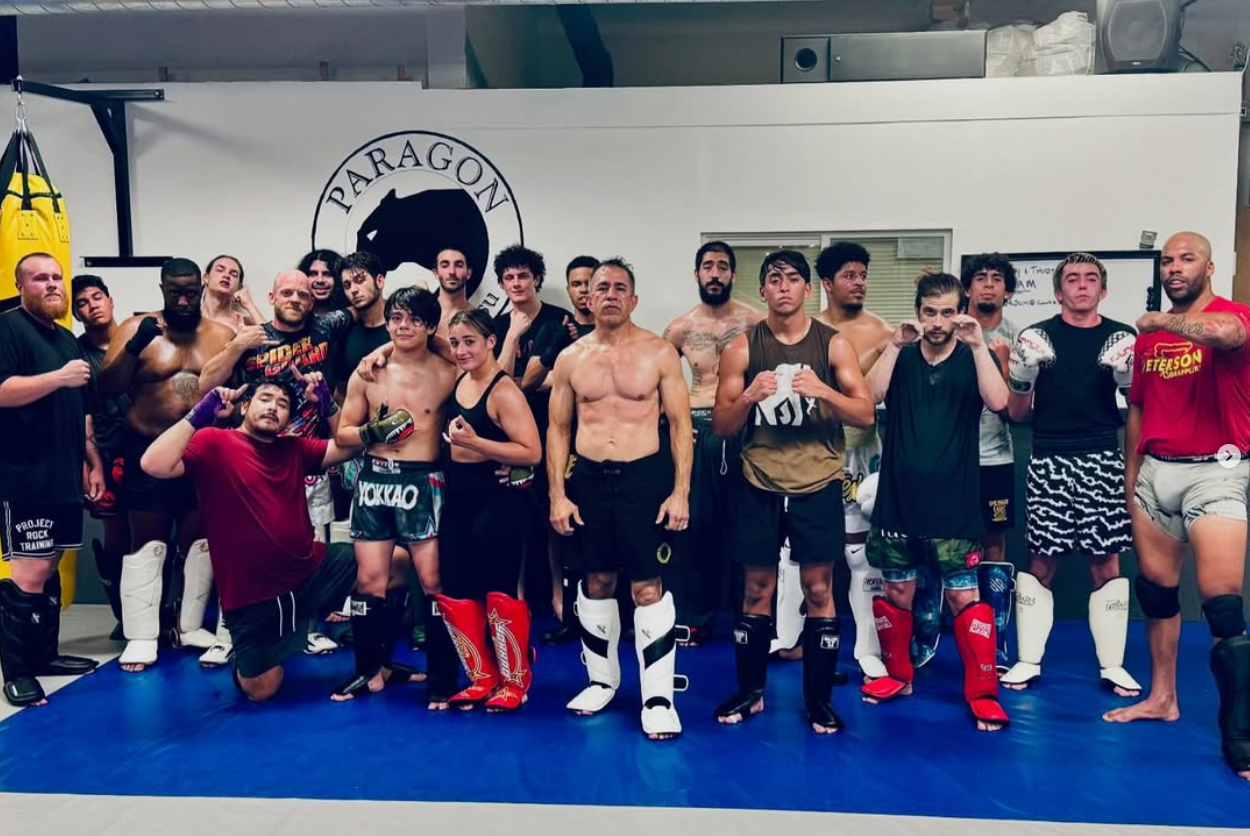
One activity can build fitness, confidence, and connection for your whole household, without needing separate schedules.
Finding a family activity in Simi Valley that actually sticks is tougher than it sounds. Between school, work, homework, and the usual calendar chaos, most families end up juggling multiple sports, multiple locations, and multiple commitments that never quite line up. We built our brazilian jiu jitsu program to solve that exact problem: one place, one shared language of progress, and a structure that works for kids, teens, and adults.
Brazilian jiu jitsu is also having a moment, and it is not a small one. Trend data from 2004 to 2024 shows search interest in Brazilian jiu jitsu up 104 percent, making it the fastest growing combat sport in America. That growth is not just hype. A global market forecast projects BJJ expanding from around 500 million in 2025 to about 1.2 billion by 2032, driven largely by youth programs and beginner friendly training options. When families ask us whether BJJ is a passing phase, the numbers and the long term belt progression both point to the same answer: this is a multi year journey that rewards consistency.
What makes it work as a family activity is simple: you can train in the same building, often in overlapping time blocks, while each person follows an age appropriate curriculum. Kids learn in a structured environment. Adults get a realistic fitness and self defense practice. Teens get a healthy outlet that feels earned, not forced. And all of you get a community that tends to keep showing up, week after week.
Why Brazilian Jiu Jitsu Is Growing So Fast
Brazilian jiu jitsu is not new, but the way people train it today has made it more accessible than ever. More structured beginner pathways, better coaching standards, and clearer safety practices have helped families feel comfortable walking into a class for the first time. Industry analysis of Brazilian jiu jitsu studios in the U.S. also recognizes BJJ as a distinct, growing segment with rising participation and revenue through at least 2029, and California holds a heavy concentration of that activity.
In practical terms, that matters in Ventura County. Simi Valley sits inside a broader Southern California grappling culture, where jiu jitsu is familiar, respected, and consistently evolving. High level competition continues to shape modern technique, and even if you never plan to compete, you benefit from training methods that are current, athletic, and thoughtfully coached.
We also see a shift in who trains. Demographic reporting still shows BJJ participation skewing male, roughly 84 percent men and 16 percent women, but women’s participation is relatively strong compared with many combat sports and continues to grow. For families, that matters because a healthy academy culture needs to feel welcoming for moms, daughters, and beginners, not just experienced athletes.
What Makes BJJ a True Family Activity, Not Just a Kids Class and an Adult Class
Most family activities are parallel, not shared. One person does their thing while everyone else watches. Brazilian jiu jitsu is different because the skills, the vocabulary, and the mindset overlap even when the classes are separated by age.
Your child learns how to frame, shrimp, base, and stay calm under pressure. You learn the same ideas, just applied with more complexity and intensity. At home, you can talk about what you learned, what felt tricky, and what improved, and it does not feel like you are speaking different languages.
There is also something quietly powerful about long term progression. Survey data across roughly 2,000 practitioners suggests an average of about 2.3 years from white to blue belt, then another 3.3 years to purple, with brown belt often landing around nine years into training. In other words, jiu jitsu is built for people who want something steady. Families like that. It becomes a rhythm, not a seasonal scramble.
Safety for Kids: Controlled Grappling, Clear Rules, and Better Decision Making
One of the first questions we hear is whether Brazilian jiu jitsu is safe for kids. The honest answer is that any physical activity carries some risk, but BJJ has a major advantage: it is primarily grappling, not striking. There are no punches or kicks in class, and we coach control as a skill, not an afterthought.
Safety is not just about padding or mats. It comes from systems: supervision, progressive instruction, and a culture where tapping and respecting boundaries are normal. Kids learn how to move their bodies, how to fall and base, and how to slow down when a partner needs it. Over time, that becomes a kind of body awareness that often carries into other sports too.
Parents also ask whether jiu jitsu makes kids more aggressive. Our experience is the opposite. When kids learn what real control feels like, and when they earn confidence through practice, they tend to become less reactive. They do not need to posture as much. They also get clear expectations around respect, listening, and accountability, which is refreshing for a lot of families who feel like everything else is fighting for their child’s attention.
What BJJ Gives Simi Valley Families That Team Sports Often Miss
We love team sports, and plenty of our students play them. But families are often looking for something team sports cannot always offer: individualized progress, consistent structure, and skills that are both athletic and practical.
Brazilian jiu jitsu gives you:
• A predictable skill path that does not depend on making a starting lineup
• Confidence that comes from solving problems in real time, not just memorizing moves
• A realistic self defense foundation for teens and adults, built on leverage and position
• A screen time alternative that still feels engaging, because training is interactive
• A place where siblings can share an activity even if their personalities are totally different
In Simi Valley, we also see a lot of kids balancing school demands and social pressure. Jiu jitsu gives them a place where effort is visible. You can feel progress in weeks, see it more clearly in months, and earn belt promotions over years. That time horizon helps kids and teens stop chasing quick wins and start valuing consistency, which is a life skill disguised as a sport.
How Our Family Friendly Structure Works in Real Life
Families do best when training is easy to repeat. That means clear class options, beginner on ramps, and a plan that does not require you to be in perfect shape before you start.
We organize training so you can plug in at your level and build from there. Kids learn fundamentals through drills, games with a purpose, and partner practice. Teens develop a stronger technical base and start learning how to handle intensity responsibly. Adults typically start in fundamentals, where we focus on movement, positional understanding, and safe, coached sparring.
If you are worried you are “too out of shape,” you are in good company. Most adults start that way. We scale intensity, emphasize technique, and help you build fitness through training rather than waiting for fitness to appear first.
What a First Class Usually Looks Like
Walking in for the first time should feel clear, not confusing. When you visit, we keep the experience straightforward so you can focus on learning, not guessing what comes next.
A typical first visit includes:
1. Checking the class schedule and choosing a beginner friendly option that fits your week
2. Arriving a little early so you can get oriented, meet our team, and settle in
3. Starting with movement basics and simple positions, so your body learns the patterns safely
4. Practicing a small set of techniques with a partner under coaching, with plenty of pauses
5. Ending with controlled rounds or positional work when appropriate, so the learning feels real
For kids, we keep structure high and expectations clear. For adults, we make sure you understand why a technique works, not just how to copy it. And for families, the win is that everyone leaves feeling like they did something real, even if it was their first day.
Belts, Progress, and What “Good” Looks Like for a Family Schedule
We like setting realistic expectations because it keeps families consistent. If you train two to three times per week, progress tends to feel steady without overwhelming your calendar. More than that can be great, but it is not required to get meaningful benefits.
Belt progression is intentionally slow in Brazilian jiu jitsu. That is part of the value. Your child might earn stripes in months as skills solidify, while belts take longer. Adults often notice changes sooner than they expect, like improved cardio, better mobility, and a calmer response to pressure, even before any visible rank changes.
The biggest sign of progress is not a belt. It is behavior. Kids start speaking up with more confidence. Teens carry themselves differently at school. Parents feel more capable, and, surprisingly often, more patient.
Why BJJ Works for Women and Girls, and How We Keep the Culture Right
Families often ask whether there is a real place for women and girls in the sport. There is, and it is growing. With women representing around 15 to 16 percent of BJJ participants and increasing, the direction is clear. The key is culture: respect, coaching, and partner selection that prioritizes safety and development.
We emphasize technical problem solving over brute force, which is one reason jiu jitsu can be so empowering. Leverage changes the conversation. Good positioning and timing can neutralize size differences, and that lesson lands especially well for teens and women who want self defense that is practical, not performative.
Why This Matters Specifically for BJJ in Simi Valley
When people search for BJJ in Simi Valley, they are usually looking for more than a workout. They want something that fits the local lifestyle: commuting parents, busy students, and families who value safe, structured activities. We lean into that reality.
We also know Simi Valley families tend to stay committed when the environment is consistent, clean, and community oriented. Over time, training becomes a social anchor. You see the same faces, you celebrate small wins, you learn how to be a good partner, and you get to belong to something that is healthier than scrolling or sitting out another season.
If you are specifically looking for brazilian jiu jitsu in Simi Valley as a family, the biggest advantage is that you do not have to split your life into separate fitness worlds. You can build a shared routine that grows with your kids.
Ready to Begin
Building a real family routine takes more than motivation, it takes an activity that is flexible, meaningful, and built to last. That is exactly why we put so much intention into how we teach Brazilian jiu jitsu, from kids’ fundamentals to adult beginner pathways, all under one roof in Simi Valley.
When you are ready, we would love to help you take the first step at Paragon Simi Valley, whether that means your child tries a class, you join a fundamentals session, or you decide to make it a shared family commitment that you revisit week by week.
Train in a supportive Brazilian Jiu-Jitsu community by joining a free trial class at Paragon Simi Valley.