
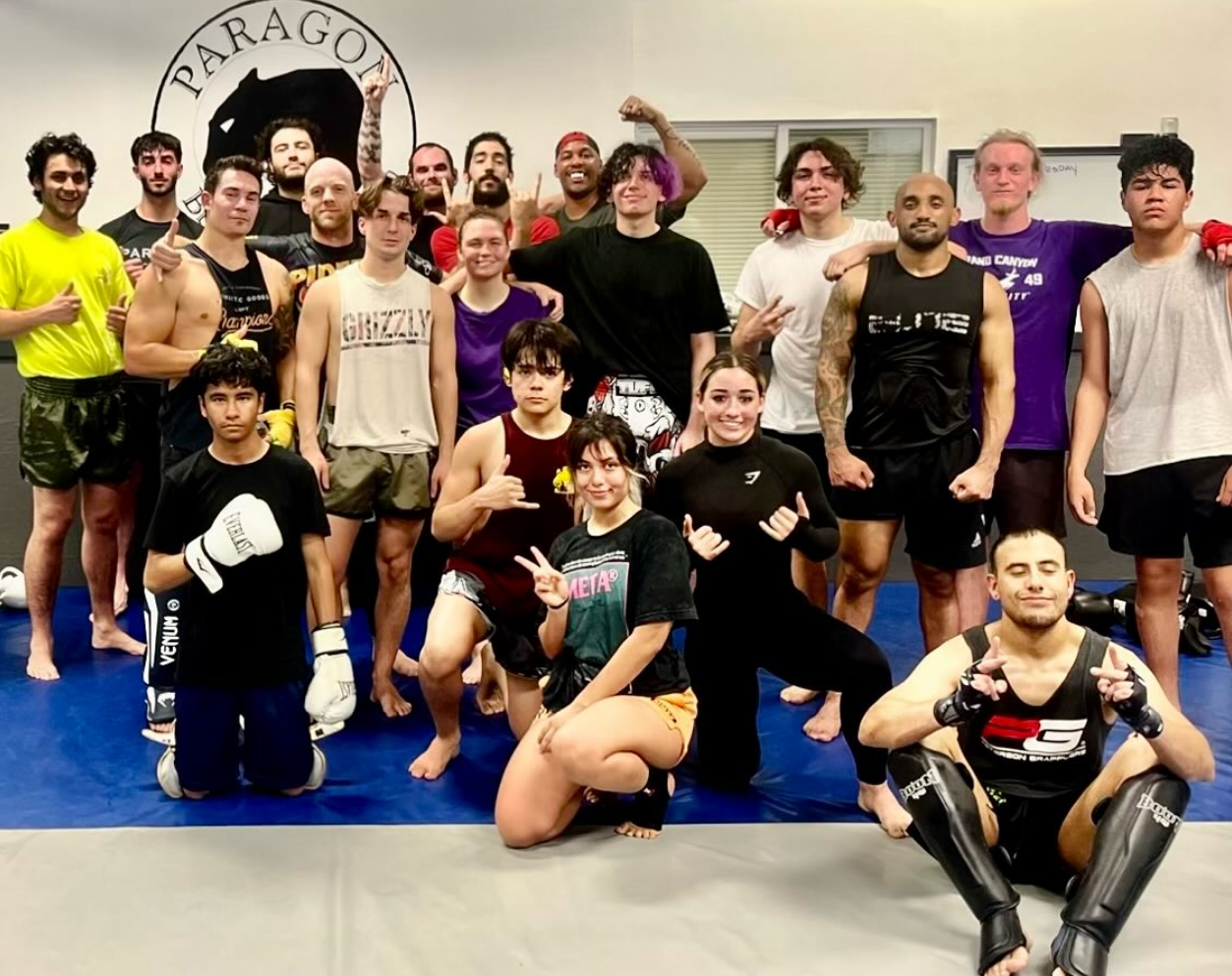
Brazilian jiu jitsu gives you a pressure-tested way to speak up, stay calm, and carry yourself differently in everyday life.
Confidence is often treated like a personality trait, but we see it more like a skill: something you build through repetition, feedback, and small wins that add up. Brazilian jiu jitsu is one of the clearest paths we know for developing that kind of earned confidence because progress is measurable and the challenges are real, not theoretical.
Just as important, training changes how you communicate. You learn to listen, adjust, and respond under pressure. You practice setting boundaries without ego, collaborating with partners, and solving problems in real time. For many adults looking for brazilian jiu jitsu in Simi Valley, that blend of confidence and communication is the real reason they keep showing up.
Why brazilian jiu jitsu builds confidence that actually sticks
You earn confidence through proof, not hype
In brazilian jiu jitsu, you cannot fake progress for long. Either your timing improves or it does not. Either you can escape a bad position or you cannot yet. That honesty is oddly comforting. It means when your confidence grows, it is based on evidence: you handled something hard, you improved, and you did it again.
Research and surveys back up what we see on the mat. One practitioner survey found 87.6 percent reported improved confidence, and another comparison showed BJJ trainees experienced a 38 percent greater confidence increase compared to traditional training. Those numbers make sense because training includes consistent problem-solving, manageable adversity, and clear milestones.
The mat teaches you to get comfortable being new
A big confidence killer is the fear of looking inexperienced. In our classes, beginners learn quickly that nobody is “above” fundamentals. We all tap. We all miss details. You learn to ask questions without feeling small, and that habit tends to follow you into work conversations, relationship talks, and even things like public speaking.
Belt promotions and milestones create momentum
Promotions in brazilian jiu jitsu are not handed out casually. When you earn one, it represents time, effort, and grit. That matters psychologically. It gives you a concrete reference point for what you can do when you stay consistent, even when motivation dips.
Communication lessons you learn without sitting in a lecture
You practice clear communication in every round
Training is physical, but it is not mindless. You have to communicate constantly, sometimes with words, sometimes with body language, sometimes by slowing down to keep your partner safe. You also learn to be direct: “Can we go lighter?” “Can you show me that grip again?” Those are simple sentences, but saying them confidently is a life skill.
Over time, the gym becomes a small community where you learn teamwork and social trust. That is one reason many adults looking for BJJ in Simi Valley stick with it. It is structured social time with a purpose, which is rare these days.
Active listening becomes a survival skill
If you do not listen during instruction, you feel it immediately. A small detail about hip angle or head position can be the difference between escaping and getting stuck. Learning to listen closely, ask a follow-up question, and apply feedback on the spot is exactly what good communication looks like at work and at home.
Conflict resolution, without the drama
Sparring is a controlled conflict. That sounds intense, but it is one of the safest environments to practice emotional control because the rules are clear and you can stop at any time. You learn to stay respectful, reset after mistakes, and separate your identity from outcomes. You tapped, you learned, you moved on. That is conflict resolution in a nutshell.
How training rewires your response to pressure
Emotional control becomes a trained reflex
When someone is applying pressure, your body wants to panic. In brazilian jiu jitsu, we train you to breathe, frame, create space, and make decisions. That pattern can carry into stressful situations outside the gym: tense meetings, tough conversations, deadlines, and unexpected problems.
Recent trends in training culture also emphasize mental health benefits, and neuroscience-focused conversations around resilience and focus have become more common. We appreciate that shift because it reflects what many students experience: training helps you regulate emotions, not suppress them.
Humility is part of confidence, not the opposite of it
One of the sneaky benefits of BJJ is humility. You lose, you learn, you improve. Regular losses, in a safe environment, reduce the fear of failure. And when you are less afraid of failing, you take healthier risks: you apply for the job, you start the conversation, you speak up sooner.
You build resilience through repeatable problem-solving
Every roll is a series of problems: you get pinned, you find a frame, you recover guard, you sweep, you stabilize. That cycle trains a positive mindset that says, “There is probably a solution here, let me work the steps.” Resilience stops being a motivational quote and becomes something you have practiced.
What confidence and communication look like in real life
At work: calm, direct, and harder to rattle
We regularly hear that students feel more composed in meetings and more comfortable speaking up. Not because training turns you into a different person, but because you get used to pressure and feedback. When you can stay calm while someone is trying to pass your guard, a status update feels a lot more manageable.
In relationships: boundaries with less heat
Healthy communication includes boundaries. On the mat, you learn to set limits clearly: intensity level, pace, when to stop, what you need help with. Practicing that repeatedly makes it easier to do at home without apologizing for having needs.
Socially: a built-in way to connect
Many adults want community but do not want awkward small talk. Training solves that. You have a shared task, shared vocabulary, and a reason to interact. Over time, communication becomes natural because you have done hard things together, and that builds trust quickly.
What to expect in our classes, especially as a beginner
A structured learning environment with real practice
A typical session includes technique instruction, partner drilling, and live training in a controlled format. Live rounds matter because they teach you to apply skills under realistic timing, but we scale intensity so you can learn safely. If you are brand new, we guide you through what to focus on first so you are not trying to memorize everything at once.
Partner training teaches communication fast
Partner drills are where you learn to give and receive feedback. You might say, “That grip feels different, what changed?” or “Can we slow that down?” That back-and-forth is communication training, whether you think of it that way or not.
Your progress is personal, not performative
Some people train for competition. Many do not. Either way, the point is growth. You are building a stronger version of yourself: more capable, more aware, more composed. And you get to do it in a room where everyone remembers what it felt like to be new.
Practical ways to use BJJ to improve confidence and communication faster
Here are a few habits we encourage because they compound quickly:
• Track one small win after each class, like escaping side control once or remembering to breathe, and let that be enough for the day
• Ask one question per week, even if it feels basic, because confident people seek clarity instead of guessing
• Choose one training partner to build consistency with, since rapport makes communication easier and learning faster
• Practice calm requests during rounds, like asking to reset or to go lighter, to build real boundary-setting skills
• Reflect on how you handled pressure, not just whether you “won,” because emotional control is the transferable skill
None of this requires talent. It just requires showing up and paying attention, which is good news if you are busy.
Time commitment: when you start feeling the mental benefits
Most adults notice changes sooner than expected, often within the first few weeks. Early improvements come from simply proving to yourself that you can do hard things and keep coming back. With consistent attendance, your confidence tends to grow in layers:
1. Weeks 1 to 4: you learn the rhythm of class, basic positions, and how to stay calm while learning
2. Months 2 to 4: you start connecting techniques, communicating more naturally with partners, and handling pressure better
3. Months 5 and beyond: you build a deeper sense of self-reliance, better emotional control, and clearer everyday assertiveness
If your schedule is tight, even a couple of sessions per week can move the needle. Consistency matters more than intensity.
Ready to Begin
Building confidence and communication is not about flipping a switch, it is about collecting proof that you can handle challenge, learn from mistakes, and stay composed when things get uncomfortable. Brazilian jiu jitsu gives you a structured way to do that, with coaching, partners, and a process that keeps you progressing.
If you are looking for BJJ in Simi Valley because you want real self-belief and better people skills, we would love to help you start in a way that feels approachable. At Paragon Simi Valley, our goal is to give you training that improves your life off the mat as much as it improves your movement on it.
Learn from experienced coaches and dedicated teammates by joining a free Brazilian Jiu-Jitsu trial class at Paragon Simi Valley.