Brazilian Jiu-Jitsu turns everyday stress into something you can handle, one calm rep at a time.
Brazilian Jiu-Jitsu is often described as a martial art, a sport, or a self-defense system, but the reason many people in Simi Valley stick with it is simpler: it makes hard things feel manageable. When you train regularly, you learn how to breathe under pressure, how to problem-solve when you are tired, and how to keep showing up even when your confidence wobbles a bit.
In our academy, we see that resilience is not a personality trait you either have or do not have. It is a skill you build. You build it in warm-ups when you would rather be on the couch, in technique rounds when you are learning a movement that feels awkward at first, and in controlled sparring when you realize you can stay safe and think clearly.
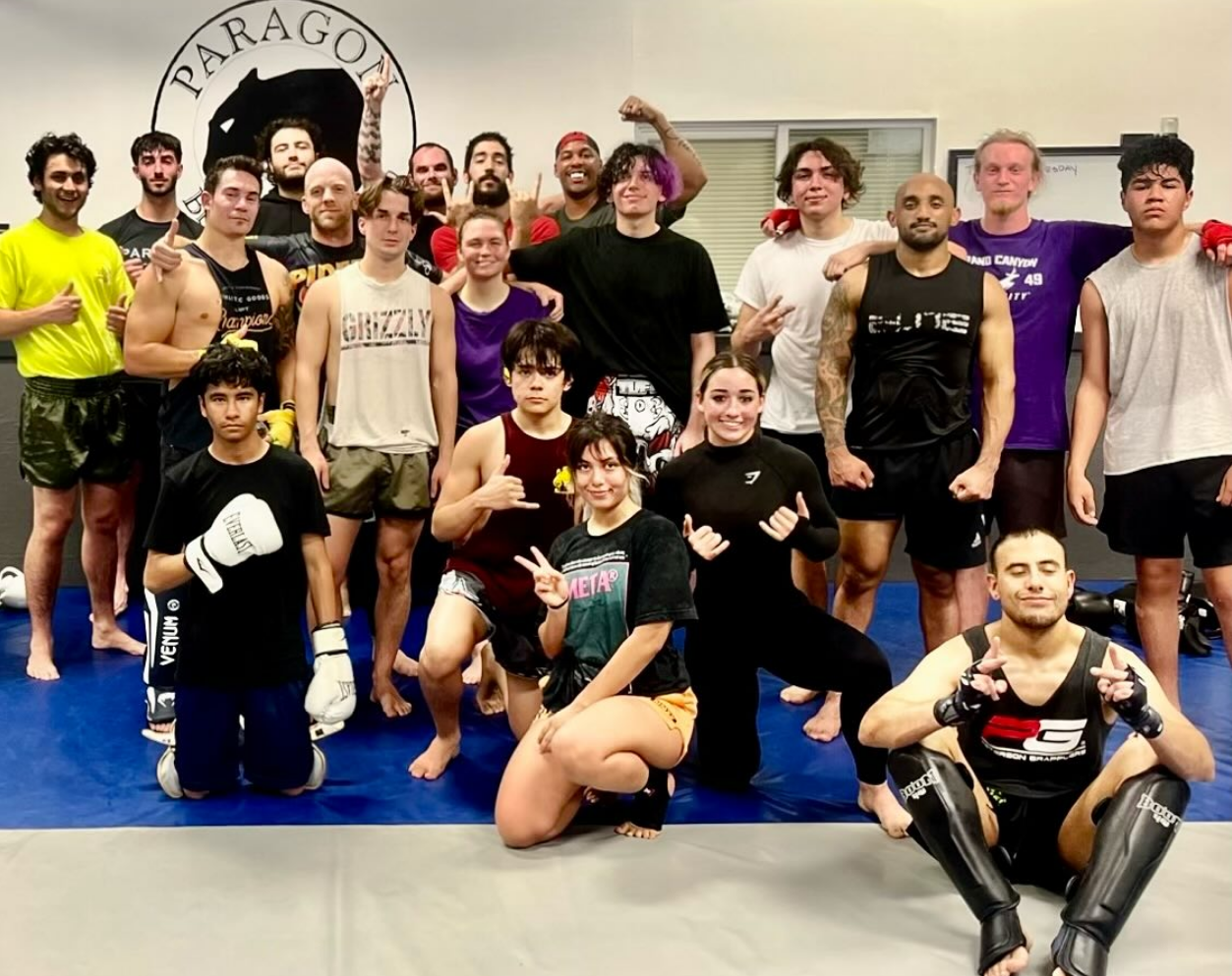
And the community part is real, too. Brazilian Jiu-Jitsu requires training partners, which means progress is shared. You do not just train near people, you train with people. Over time, that creates a kind of local support system that fits real life in Simi Valley, especially for adults balancing work, family, and the usual daily chaos.
Why Brazilian Jiu-Jitsu feels different from typical fitness
If your past workouts have been mostly solo, Brazilian Jiu-Jitsu can be a refreshing change. The structure is still there: warm-up, instruction, drilling, and live rounds. But you are also learning a language of movement with another person, and that changes the experience in a big way.
Instead of chasing numbers on a screen, you chase small improvements you can feel. Your balance gets better. Your posture gets stronger. Your breathing becomes more efficient. Even your patience improves, because rushing usually backfires on the mat.
A lot of people also appreciate that this training rewards technique over size. You will still get stronger and fitter, but you are not required to be a certain type of athlete to begin. If you can show up and stay curious, you can start.
Resilience on the mat becomes resilience off the mat
Resilience is one of those words that can sound abstract until you experience it physically. On the mat, you are placed into controlled challenges where you have to make decisions while your heart rate is up. That is a rare skill to practice in a safe environment.
Here is what that often looks like in day-to-day training:
• You learn how to stay calm when you feel stuck, because panic wastes energy and options.
• You practice resetting quickly after mistakes, because every round gives you another chance.
• You get comfortable being a beginner again, which is surprisingly powerful for adults.
Over time, you start carrying that same steadiness into everyday situations. A stressful meeting feels less overwhelming. A tough parenting moment feels more workable. Your body has proof that pressure is something you can move through, not something that has to shut you down.
How community forms in a real training environment
Community in Brazilian Jiu-Jitsu is not just about friendly greetings or knowing names, although those matter. It is built through consistent partner work and mutual responsibility.
When you drill with a partner, you are helping each other improve. When you spar, you are learning how to be intense without being reckless. And when someone brand new walks in, you remember what it was like to feel unsure, so you naturally want to make the room feel welcoming.
We structure classes so you are not left guessing where you belong. You will know what to do, who to work with, and what the goal is for that day. That consistency is what helps community grow in a sustainable way, especially for adults who cannot waste time on confusion.
Brazilian Jiu-Jitsu in Simi Valley for adults: confidence without ego
Many adults delay starting because they assume a martial arts academy is only for serious fighters. The truth is most adults are here for practical goals: fitness, self-defense, stress relief, and a sense of personal progress that is not tied to a scale.
Our adult Brazilian Jiu-Jitsu classes are designed to help you build skill step by step. You will learn how to move safely, how to protect yourself, and how to understand positions before you are expected to perform them under pressure. That matters, because confidence comes from clarity, not from being thrown into the deep end.
And yes, you will sweat. You will get tired. You might even laugh at yourself a little when a technique finally clicks after the fifth try. That is normal. That is part of the process.
Brazilian Jiu-Jitsu for kids and teens: structure, safety, and self-control
For families in Simi Valley, martial arts is often about more than activity. It is about giving kids a place to practice listening, respectful behavior, and emotional regulation in a setting that still feels fun.
In youth training, we emphasize clear rules, age-appropriate technique, and coaching that helps kids understand why we do what we do. The best improvements are not always flashy. Sometimes it is a quieter win, like a child learning to stay composed when something feels difficult, or a teen learning how to handle frustration without shutting down.
Safety is part of that, too. Good training is progressive. Kids are matched appropriately, technique is taught carefully, and the goal is long-term development. When training is structured well, children can build confidence in a way that is grounded, not aggressive.
What you will learn early on (and why it works)
Beginner progress in Brazilian Jiu-Jitsu tends to happen in layers. At first, you are learning how to move and where to place your body. Then you learn how to connect positions. Later, you learn how to set traps and anticipate reactions. It is a puzzle, and the puzzle keeps getting more interesting.
In our fundamentals-focused approach, early training typically includes:
• Escapes that teach you how to stay safe and create space under pressure
• Positional control so you can stabilize and think instead of scrambling
• Submissions taught with control, emphasizing precision and partner safety
• Takedown and stand-up awareness so you understand how grappling starts
• Basic strategy so you know what you are trying to accomplish in each position
This is also where you begin to feel the mental side of resilience. You are learning to troubleshoot in real time, which is a skill you can use everywhere.
Gi vs No-Gi: what is the difference and which should you choose?
One of the first questions we hear is about Gi and No-Gi. The Gi is the traditional uniform, and it gives you grips on sleeves and collars. No-Gi is typically trained in athletic gear and relies more on body control, underhooks, and clinch-style grip fighting.
Both are valuable. Both teach timing, leverage, and control. If you are not sure where to start, our recommendation is simple: start where you feel comfortable and consistent. Consistency beats perfect planning every time.
If you are training for self-defense, learning both helps you adapt. If you are training for fitness and skill, learning both keeps training fresh and well-rounded. We guide you either way.
What to expect in your first class (no surprises)
Starting something new is easier when you know what the room feels like. Our goal is to make your first class straightforward, safe, and genuinely useful, even if you are nervous walking in.
A first class usually follows a simple flow:
1. You arrive a little early so we can help you get oriented and answer quick questions.
2. We start with a warm-up that builds mobility and grappling-specific conditioning.
3. We teach a small set of techniques with clear details and time to practice.
4. You drill with a partner, focusing on control rather than speed.
5. Depending on the class and your comfort level, you may do light positional sparring.
You do not have to be in shape to start. Training is what gets you in shape. You just need to show up ready to learn.
What to wear to Brazilian Jiu-Jitsu class
If you are starting in a Gi class, you will need a Gi eventually, but you do not need to overthink your first day. If you are starting No-Gi, athletic wear is usually fine.
In general, we recommend:
• Fitted athletic shirt or rashguard for No-Gi, and avoid zippers or pockets
• Athletic shorts without pockets, or grappling shorts if you have them
• For Gi classes, a properly fitted Gi once you commit to training
• Flip-flops or slides for walking off the mat to keep things hygienic
• A water bottle, because you will use it
If you are unsure, check the website for beginner guidance and class details. We would rather you ask than stress about it.
Self-defense and real-world confidence: what BJJ actually gives you
Self-defense is a sensitive topic, and we take it seriously. Brazilian Jiu-Jitsu is effective because it teaches you how to manage distance, control another person, and escape bad positions. You learn how to use leverage and structure, not just strength.
But real confidence is not about feeling invincible. It is about feeling prepared. Training gives you familiarity with pressure, a better understanding of common situations, and the ability to stay calm enough to make smart decisions.
That calm is a big deal. Many people notice they carry themselves differently after a few months. Posture improves. Eye contact comes easier. You feel less reactive. Those are subtle changes, but they add up.
Can you combine Brazilian Jiu-Jitsu with Muay Thai?
Many adults want a complete skill set: grappling plus striking, conditioning plus coordination. That is why we also get questions about Adult Muay Thai in Simi Valley and how it fits alongside Brazilian Jiu-Jitsu.
If you are considering Adult Muay Thai Simi Valley, CA training, pairing it with grappling can be a practical way to round out your movement and your confidence. Striking builds timing, balance, and cardiovascular conditioning. Grappling builds control, problem-solving, and comfort in close range.
The key is to train in a way that fits your life. If you can train two to four times per week, you can make steady progress. If you can only train once or twice, you can still build skill, especially if you stay consistent and focus on fundamentals.
How often should you train to build real progress?
People love asking about the perfect schedule, but the best schedule is the one you can keep. Your body adapts through repeated exposure, and your mind adapts through repeated problem-solving.
As a practical guideline:
• 2 times per week is a strong starting point for adults with busy schedules
• 3 times per week usually creates noticeable momentum in technique and conditioning
• 4 or more times per week can accelerate progress, as long as recovery is managed
We help you approach training like a long-term practice. You do not need to win every round in the room. You need to stack small improvements week after week.
Take the Next Step
Building resilience is not a motivational quote, it is a training outcome. When you practice Brazilian Jiu-Jitsu consistently, you learn how to stay calm in uncomfortable moments, how to solve problems under pressure, and how to lean on a community that wants you to improve alongside us.
That is the environment we work to create every day at Paragon Simi Valley: structured classes, practical skill development, and a welcoming culture where beginners and experienced students can train with purpose. If you are ready to start, we will help you take the first step in a way that feels clear and doable.
Train with experienced instructors and a supportive team at Paragon Simi Valley.