
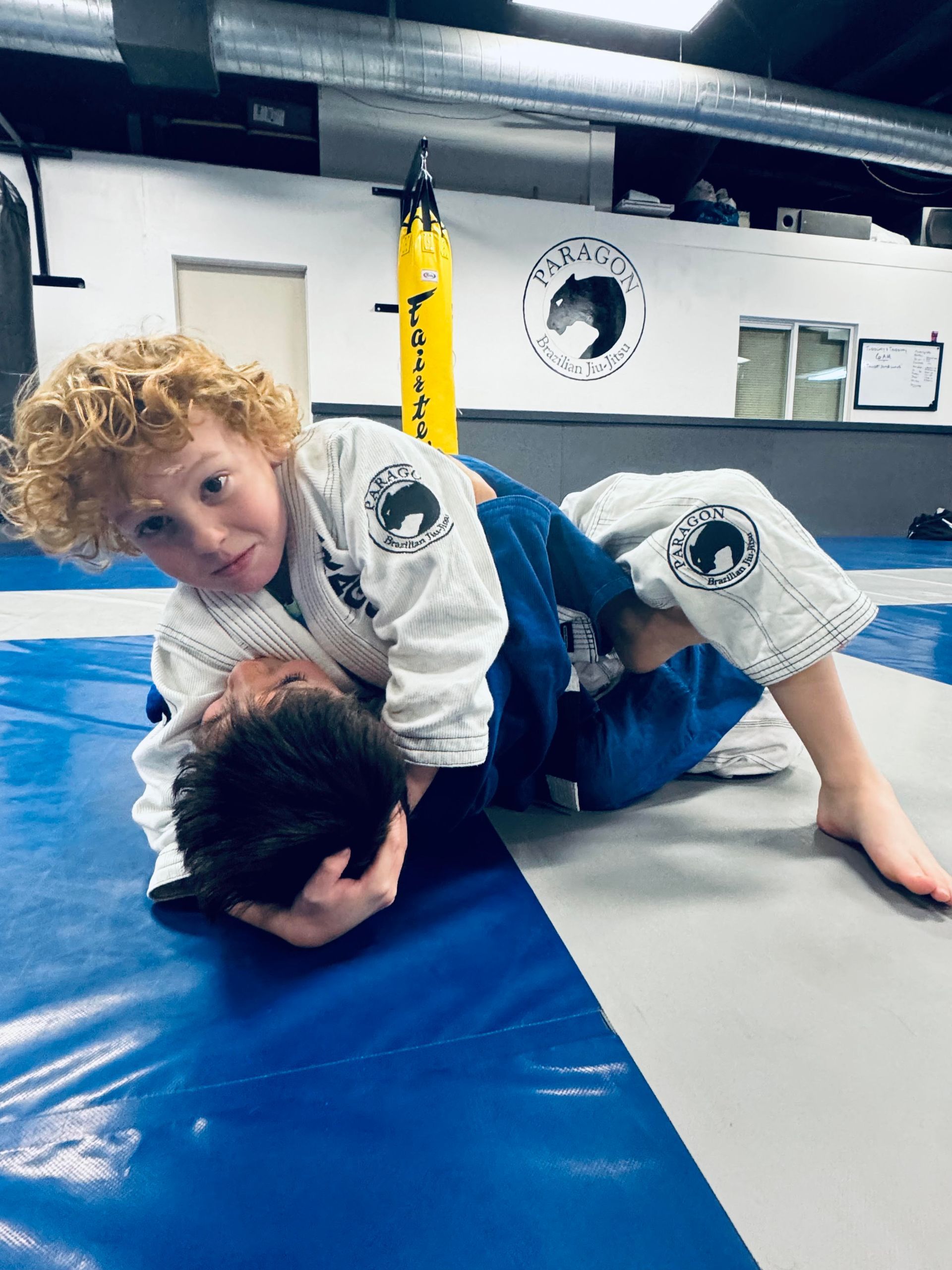
Brazilian jiu jitsu gives kids and teens a rare mix of confidence, calm under pressure, and real skills they can actually use.
Kids and teens in Simi Valley already have plenty of options for staying busy after school, but not many activities build the body and the mind at the same time. That’s a big reason families keep turning to Brazilian jiu jitsu: it’s physical, structured, and surprisingly thoughtful. In class, your child learns how to move, how to solve problems under pressure, and how to stay respectful in a room full of training partners.
We also like that the benefits show up where you actually want them: at school, at home, and in social situations. When your child starts learning how to escape a bad position, breathe, and try again, that mindset has a funny way of leaking into homework, friendships, and confidence. Brazilian jiu jitsu isn’t magic, but consistent training can be a real turning point.
Simi Valley is a family-centered community with a strong fitness and safety culture, so a program that builds discipline and practical self-defense fits naturally here. Our goal is simple: give kids and teens a place to grow stronger, more capable, and more grounded, one class at a time.
Why Brazilian Jiu Jitsu Works So Well for Kids and Teens
Brazilian jiu jitsu is often called “physical chess,” and that’s not just a catchy phrase. The art is built around leverage, positioning, balance, timing, and decision-making. That means your child isn’t relying on size or strength to succeed, which matters a lot for younger students and smaller teens.
Instead of rewarding the loudest or most aggressive personality, good training rewards focus and patience. Kids quickly learn that rushing usually makes things worse. So we teach them to slow down, pay attention, and use technique. That’s a different kind of confidence than “I can beat someone up.” It’s closer to “I can handle myself.”
Confidence that’s earned, not hyped up
Confidence in Brazilian jiu jitsu tends to be quiet. Your child learns something, drills it, tries it live, struggles, and slowly improves. Each stripe and belt promotion is a small milestone that says: you stayed consistent, you didn’t quit, you listened, and you grew.
That process matters because it builds self-belief that can’t be talked into a kid. It’s built from evidence. Your child remembers the first time an escape worked, or the first time they stayed calm instead of panicking, and it sticks.
Resilience and emotional control under pressure
Rolling (sparring) is where a lot of mental growth happens, because it’s safe pressure. Your child experiences discomfort and problem-solving in a controlled, supervised environment. We coach kids to breathe, think, and make choices instead of freezing or melting down.
Over time, many kids get better at:
- Recovering quickly after mistakes
- Handling frustration without quitting
- Taking feedback without feeling attacked
- Staying calm when something feels difficult
For teens especially, that ability to regulate emotions is huge. School pressure, social pressure, and the constant noise of phones can make it hard to feel steady. Training gives your teen an hour where the goal is clear and the work is real.
Real-World Self-Defense, Taught Responsibly
When parents search for brazilian jiu jitsu in Simi Valley, the question underneath is usually safety. Not just “Is this sport safe?” but “Will this help my kid if something happens?”
Brazilian jiu jitsu is one of the most practical self-defense systems because it focuses on what happens when someone grabs you, tackles you, or ends up on top of you. Kids learn grips, posture, base, escapes, and positional control. Those are not theoretical skills. They’re useful in real life.
Just as important, we frame self-defense the right way. We teach your child to avoid conflict, use their voice, get help from adults, and understand when physical action is appropriate. We want capable kids, not reckless ones. The goal is protection and awareness, not proving something.
Bullying: why training changes the dynamic
Bullying is complicated, and we never pretend one activity solves everything. But training can shift the dynamic in a few practical ways. Kids who carry themselves differently, make eye contact, and speak clearly often become less appealing targets. And if a situation turns physical, your child is more likely to stay composed and create space.
We also see an underrated benefit: once kids feel less afraid, they sometimes stop escalating conflicts in the first place. Fear can make kids react in ways that make situations worse. Confidence can calm that down.
How Skills Transfer to School and Home
The best part of BJJ in Simi Valley isn’t just what happens on the mats. It’s what changes outside the academy. The same habits that help your child improve in Brazilian jiu jitsu tend to support better choices everywhere else.
Focus and follow-through
BJJ rewards attention to detail. If your child stops listening for ten seconds, the technique doesn’t work. That’s immediate feedback, and kids learn quickly. Over months of training, we often see better follow-through, not because we lecture about it, but because the training environment demands it.
Goal-setting that feels real
The belt and stripe system gives kids clear, incremental targets. Instead of vague goals like “be better,” your child can aim for measurable progress: show up consistently, learn a guard pass, improve a specific escape, earn a stripe.
That kind of goal-setting is a skill, and it’s useful for school projects, sports seasons, and just learning how to stick with something when it stops being “new.”
Respect and communication
In class, kids have to cooperate. Training partners are not opponents to defeat, they’re teammates helping each other learn. We reinforce respectful language, safe intensity, and the habit of listening. It’s not fancy, but it matters, especially for kids who struggle socially or tend to interrupt at home.
Why This Matters Specifically in Simi Valley
Simi Valley is full of active families who care about safe neighborhoods, healthy routines, and positive peer groups. Brazilian jiu jitsu fits those values because it’s structured, consistent, and community-oriented. It also gives kids an outlet that feels engaging, not like another chore.
A lot of parents tell us the same thing in different words: screens are easy, and momentum matters. If your child has an after-school routine that includes movement, coaching, and positive role models, that routine can carry your whole week. And for teens, having a place that feels constructive and welcoming can be a big deal.
When you look for BJJ in Simi Valley, you’re usually looking for more than a martial art. You’re looking for a steady environment where your child can build confidence, learn boundaries, and feel part of something healthy.
What a Typical Kids or Teens Class Looks Like
We keep classes structured so kids know what to expect, and we keep them active so attention stays engaged. While the details vary by age group and experience level, a typical class flow looks like this:
1. Check-in and a quick warm-up focused on coordination and safe movement
2. Technique lesson with clear, age-appropriate coaching cues
3. Partner drilling to build timing and confidence
4. Games or positional training that make skills feel real
5. Supervised sparring for students who are ready, with safety rules reinforced
6. A brief takeaway on respect, effort, or discipline before wrapping up
You’ll notice there’s a balance: structure, but not stiffness. We want kids to learn seriously, but still enjoy it. If training feels like punishment, kids don’t stay with it. If training is only play, progress stalls. The sweet spot is both.
Age ranges and who fits where
Many kids can start around 4 to 5 years old with a focus on movement, listening, and basic positions. As kids get older, we add more structured self-defense concepts and more live training. Teens typically benefit from a pace that respects their maturity and challenges them appropriately, with a path that can eventually blend into advanced training.
If your child is shy, non-athletic, or brand new to sports, that’s okay. Brazilian jiu jitsu works for all body types because leverage and positioning matter more than pure strength. We’d rather have a focused beginner than a “natural athlete” who won’t listen.
Safety: How We Keep Training Smart
Safety is not an afterthought in a good youth program. It’s built into how we teach, how we pair students, and how we supervise live training. Brazilian jiu jitsu can be intense, but it can also be practiced safely when the culture is right.
Our safety approach includes:
- Clear mat rules, including tapping early and respecting training partners
- Age-appropriate techniques (we don’t rush kids into advanced intensity)
- Close supervision during sparring and positional rounds
- Emphasis on control over explosiveness
- Clean mat and hygiene standards to reduce skin issues and illness
We also talk about responsible use of skills. The goal is to help your child avoid conflict when possible and stay safe when avoidance fails. That’s a life skill, not just a martial arts skill.
From Shy to Strong: What We Often See Over a Few Months
Every kid is different, so we don’t promise a single outcome. But there are patterns we see again and again when students show up consistently two to three times per week.
A shy child might start by barely making eye contact, then slowly begin partnering up without hesitation. A high-energy kid might learn how to channel intensity into technique instead of chaos. A teen who doubts themselves might stop apologizing for taking up space and start moving with purpose.
The changes usually look small day-to-day. Then one day you realize your child is standing straighter, speaking more clearly, and handling frustration better. That’s the real win.
Building Leaders: The Long-Term Path for Teens
Teens need more than exercise. They need identity, competence, and a healthy peer group. Brazilian jiu jitsu gives teens a path where effort becomes skill, and skill becomes confidence.
As teens progress, training can become a leadership laboratory. We encourage older students to set an example in how they train, how they treat newer students, and how they manage emotions. That kind of leadership is earned, not assigned.
For many teens, this becomes a positive anchor. Not because life gets easier, but because your teen gets sturdier.
Take the Next Step
If you want your child to build confidence, resilience, and real self-defense skills, Brazilian jiu jitsu is one of the most practical ways to do it, especially when training is consistent and coached with care. At Paragon Simi Valley, we’ve built our kids and teens programs to support the whole journey: safe fundamentals first, steady progress over time, and a culture where respect and effort matter.
When you’re ready, we’ll help you choose the right class level, understand how promotions work, and set a realistic training rhythm that fits your family schedule. If you’ve been looking for brazilian jiu jitsu in Simi Valley that develops strong kids and grounded teens, we’d love to meet you.
Experience how Brazilian Jiu-Jitsu builds resilience and discipline by joining a free trial class at Paragon Simi Valley.