
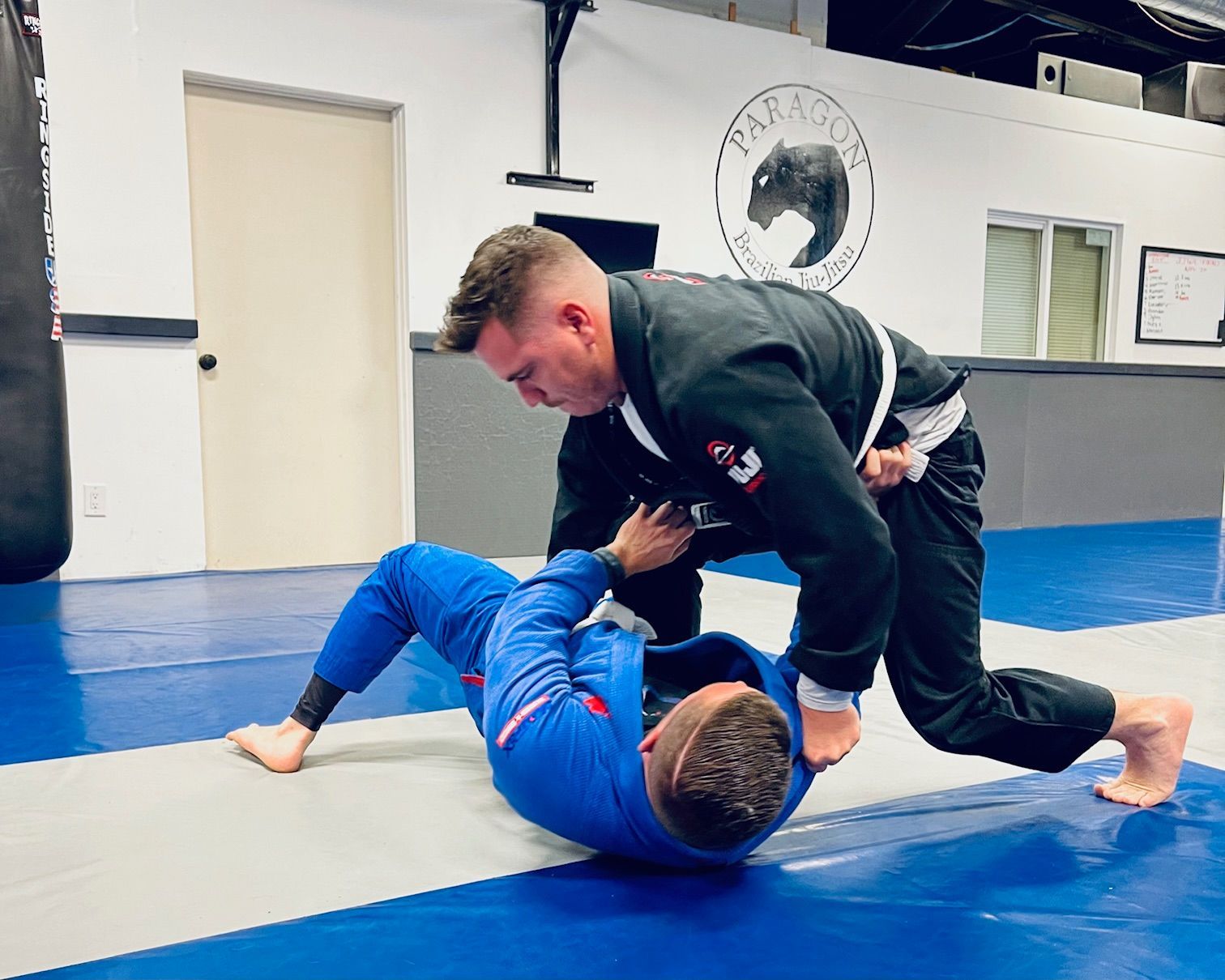
You do not have to be in shape to start, but you will be different if you stay.
Starting brazilian jiu jitsu is a funny mix of excitement and doubt. You might be thinking about fitness, self-defense, stress, or just wanting a hobby that is not another screen in your face. Whatever brought you here, we built our training to meet you at the beginning, not after you already feel “ready.”
Here is the reality we see all the time: the first few weeks can feel awkward. The movements are unfamiliar, the terminology sounds like a new language, and your body has opinions about shrimping across a mat. That is normal. It is also why our job is not just to teach techniques, but to guide you through the beginner phase so you can actually enjoy the process and keep showing up.
Brazilian Jiu Jitsu is also not a niche thing anymore. Search interest for BJJ in America rose 104.35 percent from 2004 to 2024, and roughly 6 million people practice worldwide, with about 750,000 in the USA. Growth is great, but it comes with a challenge: about 70 percent of white belts quit, and only about 10 percent move beyond that stage. So this article is not hype. It is a practical map of what changes when you commit, what you can expect as a beginner, and how we help you go from couch to combat in a way that feels achievable.
## Why brazilian jiu jitsu feels hard at first and why that is a good sign
### You are learning leverage, not just moves
Most beginners try to “muscle through” everything. That works in the weight room, but it burns you out fast on the mats. In brazilian jiu jitsu, technique is the multiplier. Leverage, timing, frames, and angles matter more than raw strength, which is why smaller people can control bigger people when the mechanics are right.
When it finally clicks, you feel it in your body like a light switch. Your shoulders relax. Your breathing steadies. You stop panicking when someone closes distance. You start recognizing patterns instead of scrambling.
The beginner learning curve is steep, but it is also predictable
White belt can feel like drinking from a fire hose. You learn positions, escapes, guard concepts, grips, and etiquette all at once. The good news is that early progress is not about learning everything. It is about learning the right handful of things and repeating them until your reactions improve.
Many students who quit are not failing. They are just trying to sprint through a marathon. Our structure keeps you focused on fundamentals that give you quick wins: getting comfortable on the ground, staying safe, and understanding where you are in a roll.
What “from couch to combat” actually looks like in your first month
Week 1: Comfort, safety, and a few basics you can repeat
Your first class should not feel like a tryout. We introduce the environment, explain how partners work together, and keep you moving without throwing you into chaos. You learn foundational movement and a couple of techniques that make sense right away, like basic escapes and how to maintain safer posture.
Expect to be a little sore. Expect to feel like you forgot left and right once or twice. That is part of the process.
Week 2: You start noticing positions instead of just pressure
Around the second week, you begin to understand that “getting smashed” is often a positional problem, not a personal one. You learn how to create space with frames, how to recover guard, and how to avoid giving up your back.
This is where many beginners start to feel a spark of confidence. Not because you are dominating anyone, but because you are less lost.
Week 3: Controlled sparring becomes a learning tool, not a stress test
When rolling is introduced progressively, it becomes feedback. You realize what breaks under pressure and what holds. You learn to tap early, reset, and go again. It is humbling, yes, but it is also oddly freeing. There is no pretending on the mat. You either have the position or you do not, and you get another rep immediately.
Week 4: You can “survive,” and survival turns into offense
By the end of a month, most consistent beginners can protect themselves better, escape more often, and stay calmer. You start exploring simple offense: a basic guard pass, a straightforward submission setup, a positional control that does not rely on athleticism.
The transformation is not just physical. You carry yourself differently outside the gym because you know you can deal with pressure and keep thinking.
The skills that make beginners stick with BJJ in Simi Valley
The students who make it past the high-dropout stage usually share the same practical habits. Not glamorous, just effective.
• They train consistently, even if it is only two days per week, because repetition beats intensity
• They focus on one or two goals per class, like “recover guard” or “escape side control,” instead of chasing everything
• They ask questions and accept coaching without taking it personally
• They tap early and treat safety as a skill, not a limitation
• They measure progress in small wins, like better posture, calmer breathing, and cleaner movement
If you want a realistic long-term view, research suggests the average time at white belt is around 2.3 years, and blue belt is about the same. That is not a reason to hesitate. It is a reminder that you are joining something deep enough to keep paying off.
Fitness changes you feel fast, even if you have not worked out in a while
Brazilian jiu jitsu is a full-body workout, but it does not feel like running on a treadmill staring at the wall. You push, pull, bridge, rotate, and stabilize. Your grip gets stronger. Your core turns on. Your hips start doing what hips are supposed to do.
A lot of beginners notice changes like:
- improved endurance from repeated rounds and steady movement
- better joint awareness because technique demands control and alignment
- weight loss or body recomposition when training becomes a routine
- increased flexibility in the hips and shoulders from positional movement
- more “usable strength,” meaning you feel stronger in everyday tasks
And because training has built-in variability, you rarely get bored. One day you are working escapes. The next day you are learning how to control someone without squeezing the life out of them.
Mental health, stress relief, and the quiet confidence that follows you home
We like talking about self-defense and sport, but the mental benefits are just as real. A 2024 study reported that 92 percent of participants who trained martial arts at least twice per week saw improved mental health outcomes. That lines up with what we hear: people feel less anxious, more confident, and more resilient.
BJJ forces presence. You cannot half-think your way through someone trying to pass your guard. Your brain drops the day’s noise and locks into the problem in front of you. For many beginners, that becomes the best kind of stress relief, the kind that actually resets you.
Over time, you develop mental flexibility. You get used to losing small battles and staying calm enough to adjust. That mindset transfers into work, relationships, and the general friction of everyday life.
Self-defense for beginners: what we prioritize first
Self-defense is not about learning 100 moves. It is about learning to manage distance, control positions, and escape bad situations. In brazilian jiu jitsu, you learn how to protect yourself when things get close, when balance is compromised, or when you end up on the ground.
We prioritize fundamentals that show up in real life:
- how to stay calm and breathe under pressure so you do not freeze
- how to establish posture and base to avoid being controlled
- how to escape common pins like mount and side control
- how to recognize when to disengage versus when to control
- how to apply submissions as a last resort, with control and responsibility
This is also where our training culture matters. You should not feel like you are “proving toughness.” You should feel like you are building competence, one safe rep at a time.
What to expect in a typical class (and how to use the class schedule)
A class usually follows a rhythm that helps beginners learn without getting overwhelmed. We warm up with movements that directly support grappling, then we teach technique with details that matter, and we build toward drilling and live practice.
If you want to make training fit your life, the class schedule is your best tool. Pick days you can realistically commit to. Two consistent sessions per week beats one hard week followed by two weeks off. If you can train three days some weeks, great. If not, no guilt. Consistency is the real secret.
Common fears beginners have (and how we handle them)
“I am not in shape.”
You do not need to be. Training is what gets you in shape. We scale intensity, pair you appropriately, and focus on learning. Your cardio will improve because you keep showing up, not because you were already fit.
“I do not want to get injured.”
That is reasonable. Training is physical, but we reduce risk through coaching, controlled intensity, and a culture where tapping is respected. Beginners learn how to move safely, how to communicate with partners, and how to progress at a pace that makes sense.
Interestingly, data suggests novice athletes can see slightly higher injury rates in training than competition, which surprises people. The takeaway is simple: smart training habits matter. We teach you those habits early.
“I do not want to compete.”
You do not have to. Many students train for fitness, self-defense, and personal development. Competition is optional. The benefits are not.
The beginner mindset that takes you beyond white belt
If 70 percent of white belts quit, the goal is not to be “tough enough.” The goal is to build a routine and a relationship with learning. You will have days where everything clicks and days where you feel clumsy again. That is normal.
What we encourage is simple:
1. Show up even when you feel off, because those sessions build durability
2. Track small progress markers, like improved escapes or calmer rounds
3. Ask for one correction at a time, then drill it until it sticks
4. Treat rest, hydration, and sleep like part of training, not an afterthought
5. Stay connected to the room, because community is a real retention tool
Over time, the “combat” part becomes less about fighting and more about competence: you can control positions, make decisions under stress, and stay composed.
Ready to Begin with Paragon Simi Valley
Building a foundation in brazilian jiu jitsu is not about being fearless, it is about being willing to start. At Paragon Simi Valley, we guide you through the beginner phase with structured fundamentals, progressive live training, and a culture that values safety and steady improvement.
If you are looking for brazilian jiu jitsu in Simi Valley that feels welcoming but still serious about skill, our mats are ready when you are. Show up consistently, follow the process, and you will feel the shift, not overnight, but unmistakably.
New to martial arts? Start your journey by joining a martial arts class at Paragon Simi Valley.