
Starting your Brazilian Jiu-Jitsu journey can feel overwhelming at first
I remember walking into my first class, honestly not knowing what to expect. There's something about the quiet intensity of a training room that hits you right away. The sound of mats shifting underweight, the occasional exhale during a particularly challenging hold. At Paragon Simi Valley, beginners quickly discover that Brazilian Jiu-Jitsu isn't just about learning moves - it's about understanding how your body moves through space and how leverage can overcome strength.
The morning light filters through the windows at Paragon Simi Valley during early classes, and you can hear the gentle hum of traffic starting to build outside on Cochran Street. But inside, the focus is entirely on mastering fundamental techniques that will serve as building blocks for everything else you'll learn.
Understanding Core Positions First
Before jumping into submissions or escapes, beginners need to understand where they are on the mat. Positions in Brazilian Jiu-Jitsu tell a story - they reveal who has control and what opportunities exist for both people involved.
The closed guard position might look simple from the outside, but it's actually quite sophisticated. You're on your back with your opponent between your legs, and your legs are locked around their waist. This position offers surprising control for the person on bottom. At Paragon Simi Valley, instructors emphasize that the closed guard isn't a place to rest - it's an active position where you're constantly looking for openings.
Mount position represents one of the most dominant spots you can achieve. When you're sitting on your opponent's chest with your knees on either side, you have tremendous control over their movement. The person underneath can feel quite helpless, which is exactly the point. This position opens up numerous submission opportunities.
Side control feels different from mount - you're positioned perpendicular to your opponent, controlling their upper body with your weight and positioning. It's often the first dominant position beginners achieve consistently, and it teaches important lessons about using body weight effectively.
Back control, where you have your hooks in behind your opponent's legs while controlling their upper body, represents perhaps the most dangerous position for the person being controlled. The vulnerability is immediate and intense.
Essential Submissions Every Beginner Should Learn
Learning submissions in Brazilian Jiu-Jitsu feels like unlocking a puzzle. Each technique has its own rhythm and timing. At Paragon Simi Valley, beginners start with submissions that teach fundamental principles of leverage and control.
The armbar stands out as one of the most recognizable submissions. You isolate your opponent's arm and use your entire body to create pressure against their elbow joint. The technique requires precise positioning - your hips must be close to their shoulder, and your legs need to control their head and arm. When executed properly, the submission is nearly impossible to resist.
Triangle chokes develop incredible leg strength and teach you to use your lower body as a weapon. The setup involves creating an angle with your legs around your opponent's neck and one arm, then squeezing to cut off blood flow. The feeling of setting up a triangle correctly - when everything clicks into place - is quite satisfying.
The rear naked choke from back control remains one of the highest percentage submissions in the sport. With proper hooks in place and a seatbelt grip controlling your opponent's upper body, you slide your arm around their neck and complete the choke. The technique feels almost gentle until you realize how effective it is.
Omoplata submissions target the shoulder joint and require significant flexibility and timing. This technique teaches beginners to think several moves ahead, as the setup often involves multiple adjustments and transitions.
Defensive Movements and Escapes
Learning to escape bad positions might be even more important than learning submissions. These movements create space when you need it most, and practicing them builds the confidence to stay calm under pressure.
Hip escapes, also called shrimping, form the foundation of most defensive movements. The technique involves lying on your back, pushing off the mat with one foot, and sliding your hips away to create space. The movement feels awkward at first - your body isn't naturally inclined to move this way. But with practice at Paragon Simi Valley, the hip escape becomes as natural as walking.
Bridge and roll escapes help you get out from under mount position. You plant your feet close to your hips, explosively bridge your hips up while turning onto your shoulder, and use the momentum to reverse positions. The timing has to be precise - too early and your opponent adjusts, too late and you waste energy.
Elbow escapes teach you to work methodically from bad positions. Instead of panicking when mounted, you learn to frame with your arms, create small amounts of space, and gradually work your way to a better position. The process requires patience, which isn't always easy when someone is sitting on your chest.
The key to all defensive movements is remaining calm while uncomfortable. That's easier said than done, but the controlled environment at Paragon Simi Valley provides the perfect place to practice these skills without the pressure of competition.
Sweeps and Transitions
Sweeps allow you to reverse positions, turning defense into offense in a single movement. These techniques demonstrate how Brazilian Jiu-Jitsu rewards technique over strength.
The scissor sweep from closed guard represents one of the most fundamental reversals. You control your opponent's collar and sleeve, open your guard to place one shin across their belly while the other leg hooks behind their knee, then scissor your legs while pulling them forward. When executed correctly, even a much larger opponent will topple over.
Guard passing requires a different mindset entirely. Instead of looking for submissions, you're working methodically to get past your opponent's legs and establish a dominant position. The process teaches patience and systematic thinking. Each small adjustment brings you closer to your goal.
Back takes from various positions showcase how Brazilian Jiu-Jitsu flows together. A failed submission attempt might transition directly into back control, turning a defensive moment for your opponent into an even worse position.
Building Your Foundation at Paragon Simi Valley
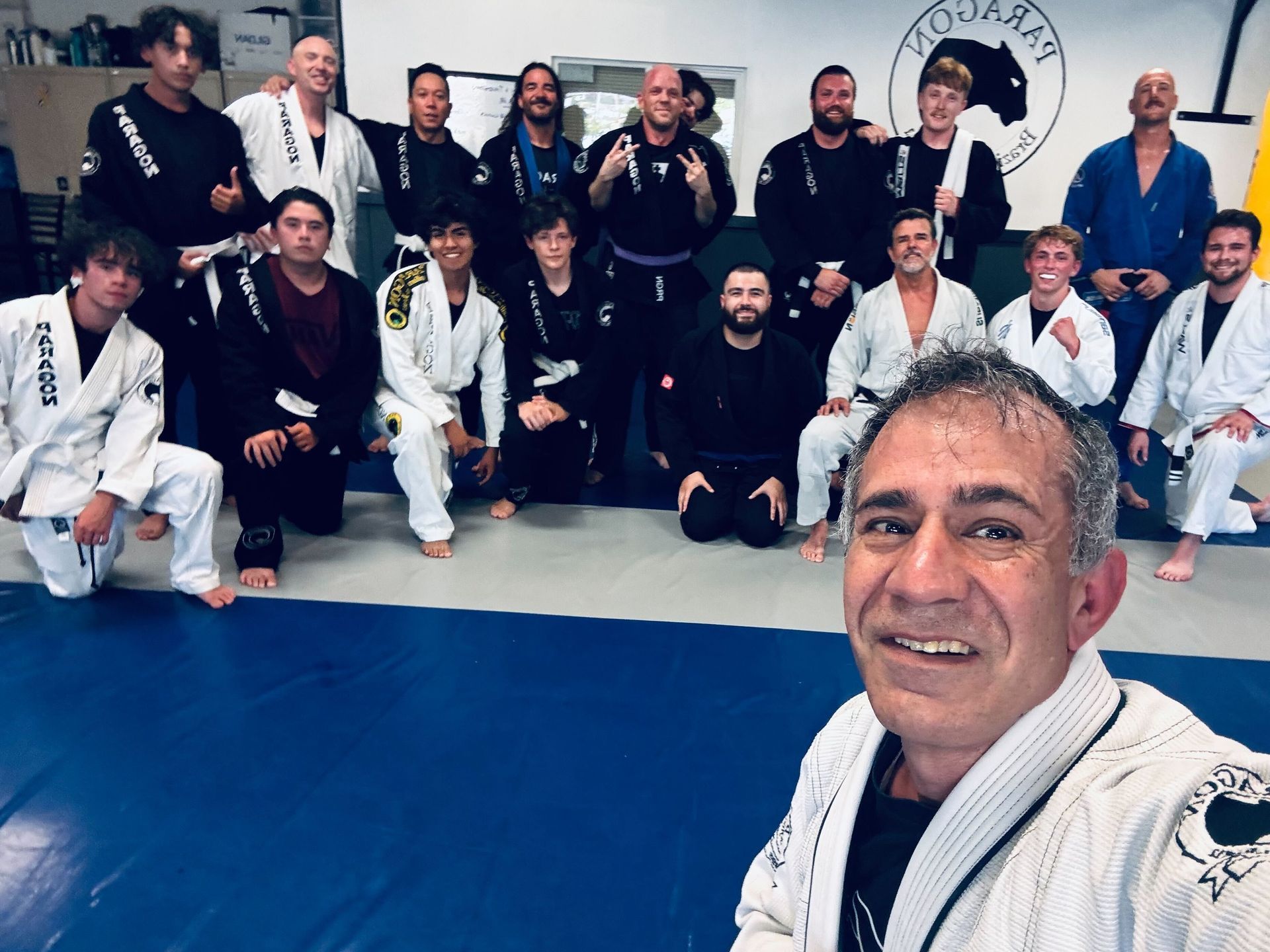
Walking into Paragon Simi Valley for the first time, you might notice how welcoming the atmosphere feels despite the intensity of the training. The instructors understand that Brazilian Jiu-Jitsu can feel overwhelming initially, so they break down complex movements into manageable pieces.
The structured approach to teaching fundamentals ensures that you develop proper body mechanics before advancing to more complex techniques. Each class builds on previous lessons, creating a logical progression that prevents gaps in your understanding.
Training partners at different skill levels provide valuable learning opportunities. Rolling with someone more experienced teaches you to stay calm under pressure, while working with fellow beginners allows you to practice techniques without feeling overwhelmed.
The consistency of training matters more than intensity. Showing up regularly, even when you don't feel particularly motivated, builds the muscle memory and mental toughness that Brazilian Jiu-Jitsu requires. Some days the techniques click immediately, other days everything feels awkward and unnatural. Both experiences are part of the journey.
Progress in Brazilian Jiu-Jitsu rarely follows a straight line. You might master a technique one day, then struggle with it the next week. The mental aspect of training - learning to accept temporary setbacks while maintaining long-term focus - often proves more challenging than the physical techniques themselves.
Developing Your Personal Game
As you advance through your beginner phase at Paragon Simi Valley, certain techniques will feel more natural than others. Some people gravitate toward guard play, others prefer top positions. This natural preference starts to shape your personal approach to Brazilian Jiu-Jitsu.
The closed guard might become your home base - a place where you feel comfortable and confident. From there, you start to develop favorite setups for submissions and sweeps. The triangle choke that felt impossible during your first week suddenly becomes one of your most reliable techniques.
Understanding your own body type influences which techniques work best for you. Longer limbs might make certain submissions easier to achieve, while a stockier build might favor pressure-based approaches from top positions.
The mental game develops alongside the physical techniques. Learning to stay calm while someone is trying to submit you, thinking several moves ahead while defending, and recognizing opportunities as they arise - these skills transfer far beyond the training mat.
Conclusion
Mastering these fundamental Brazilian Jiu-Jitsu moves provides the foundation for everything else you'll learn in this incredible martial art. The journey from complete beginner to confident practitioner requires patience, consistency, and quality instruction. At Paragon Simi Valley, the emphasis on proper fundamentals ensures that your Brazilian Jiu-Jitsu foundation will support years of continued growth and learning.
The techniques themselves are just the beginning. The real transformation happens gradually - increased confidence, better problem-solving abilities, and the quiet satisfaction that comes from mastering something genuinely challenging. Brazilian Jiu-Jitsu rewards those who show up consistently and approach training with humility and determination.
---
If you're curious about experiencing these fundamental techniques firsthand, you might find value in exploring what Paragon Simi Valley offers at https://www.paragonsimivalley.com/.
For those interested in understanding the deeper principles behind Brazilian Jiu-Jitsu movement and leverage, this resource explains things in a clear, accessible way that complements hands-on training.
If you're ready to take that first step toward learning these essential skills in a supportive environment, visiting Paragon Simi Valley might be worth considering for your Brazilian Jiu-Jitsu journey.
