
This is a subtitle for your new post
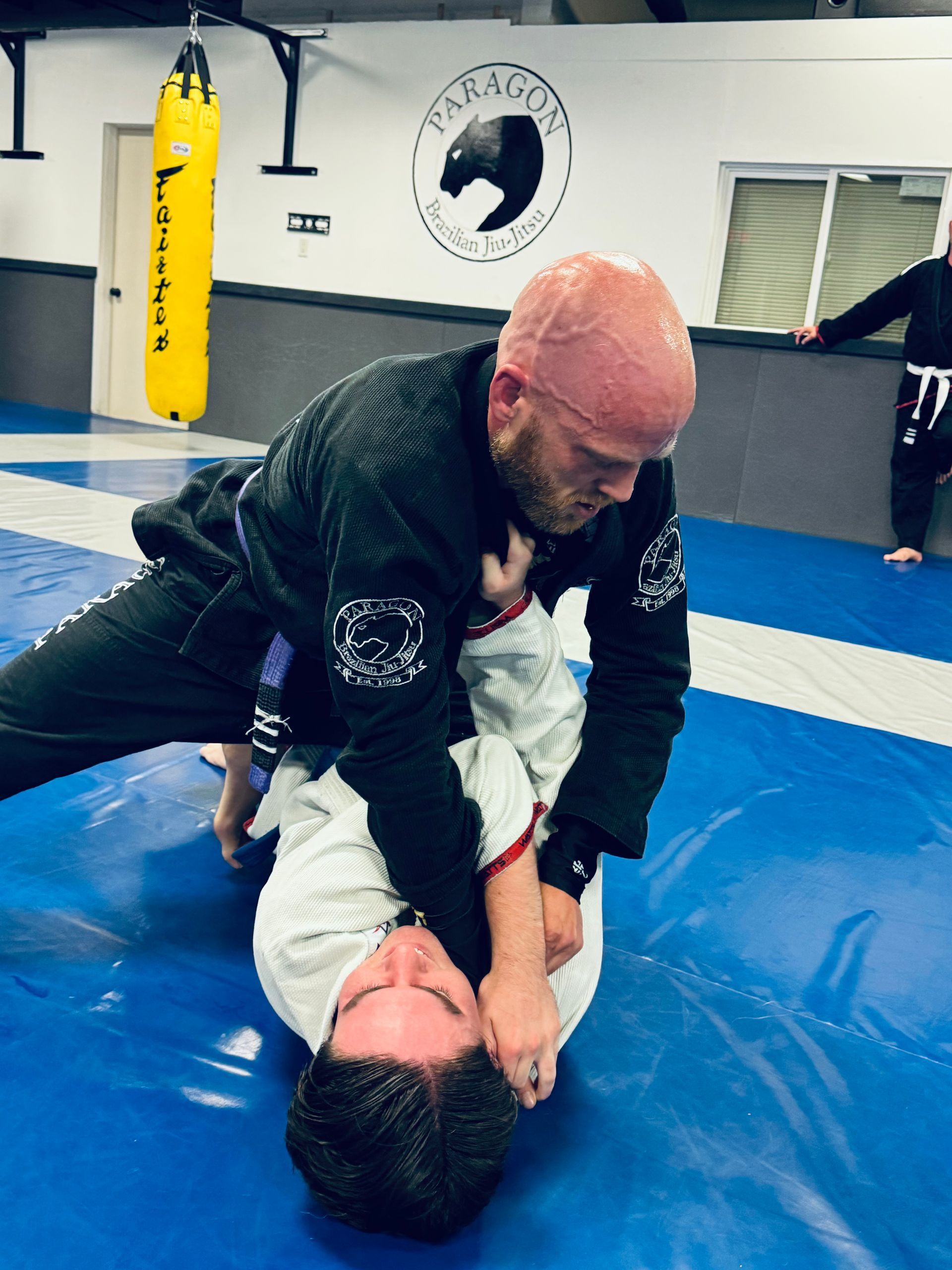
Brazilian Jiu-Jitsu gives you a rare mix of calm thinking and hard work, all in the same hour.
Brazilian jiu jitsu keeps growing for a reason: it’s practical, mentally demanding, and surprisingly grounding. It asks you to slow down and pay attention, even while you’re moving fast. In a busy place like Simi Valley, that combination matters more than most people expect. You’re not just learning techniques, you’re training your ability to stay present.
We also see a common pattern: people come in looking for fitness or self-defense, and they stay because their day-to-day focus improves. The details of class, grips, posture, breathing, timing, decision-making start to spill into everything else. If you want a training routine that helps your body and your mind, brazilian jiu jitsu is one of the most consistent paths we’ve found.
Why brazilian jiu jitsu builds real balance and focus
Balance is not just standing on one foot without wobbling. In grappling, balance means knowing where your weight is, where your base is, and how to keep working when somebody is trying to take those things away. Focus is similar: it’s not “trying harder,” it’s being able to notice what matters and ignore what doesn’t.
In training, you get immediate feedback. If your hips drift too far, you get swept. If your posture breaks, you get pulled into a position you didn’t plan on. That feedback loop is honest, and it’s one of the reasons BJJ in Simi Valley has become such a strong option for people who want more than a standard workout.
There’s also a mental reset built into the process. When you’re learning a guard pass or defending a choke, you don’t have room to mentally multitask. Your attention gets pulled into the moment. That’s not a trendy “mindfulness hack.” It’s just the reality of doing something challenging with a partner.
The stress-to-skill switch most beginners notice
A lot of beginners feel a spike of nerves in the first few classes. That’s normal. But something interesting happens when you keep showing up: you learn to trade panic for process. Instead of thinking, “I’m stuck,” you start thinking, “I’m in side control, I need frames, then hips, then recover guard.” You learn sequences.
That shift is the foundation of focus. You’re practicing staying problem-solving oriented under pressure, in a safe environment, with clear rules and coaching. And when you leave class, regular stress tends to feel more manageable because you’ve trained your response to it.
Training in Simi Valley: why local consistency matters
Consistency is what changes you, not one perfect session. When you train close to home, you can make it part of your week the way you’d schedule work meetings or school pickup. That’s a big deal in suburban areas where time is real and commutes add up quickly.
Our goal is to make your training routine sustainable. That means giving you a clear path from beginner fundamentals to more advanced rounds, so you always know what you’re working on and why. It also means creating a room culture where you can train hard without feeling like you need to “prove” something every class.
And because Southern California has a deep martial arts culture, the overall standard for instruction and technical development is high. We treat that as a responsibility. You’re trusting us with your time, your body, and your learning curve.
What you’ll actually practice in our classes
People sometimes imagine brazilian jiu jitsu as nonstop sparring. In reality, strong training is structured. We build skill in layers: movement, technique, timing, and only then intensity. You’ll learn how to control positions, escape safely, and apply submissions with care.
Here’s what a typical learning progression includes:
• Positional fundamentals like guard, side control, mount, and back control, so you understand where you are and what your job is in each spot
• Escapes and defensive habits, including frames and hip movement, to help you stay safe and regain position without scrambling
• Control concepts like base, posture, and pressure, because control is what creates calm in the middle of chaos
• Submissions that prioritize mechanics over strength, with special emphasis on high-percentage chokes since chokes dominate finishes in top competition
• Live rounds scaled to your experience level, so you can practice decision-making without getting overwhelmed
This is where the balance piece becomes real. You’re building physical balance through posture and base, and mental balance through decision-making and composure.
The case for gi and no-gi, and how we use both
One of the first choices new students hear about is gi versus no-gi. We don’t treat this like a rivalry. Both develop important skills, and the best long-term approach is usually a blend.
Gi training for structure and precision
Gi training slows things down in a good way. Because grips can hold you in place, you’re forced to solve problems with clean technique. For beginners, that structure makes learning more straightforward. You can feel when a grip is strong or weak, when posture is broken, and when you’re truly controlled.
No-gi training for movement and urgency
No-gi tends to be faster and more scramble-heavy. You learn to connect positions without relying on cloth grips, and you develop a strong understanding of underhooks, head position, and hip control. No-gi has been professionalizing rapidly, and it’s a great way to pressure-test your timing and conditioning.
If your goal is long-term progress in brazilian jiu jitsu in Simi Valley, we’ll help you understand what each style develops, then guide you toward a training balance that fits your schedule and your body.
Safety, injuries, and the smart way to keep training
Injuries are one of the biggest entry barriers people worry about, and we take that seriously. Grappling is a contact sport, so risk can’t be zero. But risk can be managed with culture, coaching, and pacing.
We emphasize controlled training, clear tapping etiquette, and partner selection that matches your experience. We also coach you to recognize early warning signs: fatigue that changes your movement quality, stubbornness that keeps you in bad positions too long, and rushing techniques without understanding the mechanics.
Technology is becoming part of the sport, too. Wearables and training apps are increasingly used to track recovery, sleep, and workload. You don’t need gadgets to start, but the overall trend is helpful: it’s pushing athletes to think about longevity, not just intensity.
A few practical habits that protect your progress
1. Tap early and often while you’re learning, because your job is to return tomorrow, not win practice
2. Focus on position before submission, since rushed submissions create messy movement and higher injury risk
3. Treat warmups as skill-building, not a chore, because good movement reduces strain
4. Ask questions right away when something feels unclear, because confusion turns into hesitation, and hesitation turns into awkward pressure
5. Build consistency before intensity, so your body adapts gradually and your mind stays confident
This approach keeps training enjoyable, and enjoyment matters for retention. People don’t quit because BJJ “doesn’t work.” People quit when it stops fitting into life.
Progress, belt timelines, and staying motivated
Belts are part of the culture, but we frame them as a side effect of skill, not the main goal. On average, it can take years to move through ranks. Industry data shows long timelines, with major milestones often taking multiple years of steady training.
That might sound intimidating, but it’s also freeing. You don’t have to rush. You can focus on small wins: escaping side control cleanly, holding mount longer, finally understanding how to use your legs in guard instead of just your arms. Those moments add up.
We coach you to measure progress in ways you can feel week to week:
• You breathe more calmly during tough rounds
• You recognize patterns faster, even if you still get caught sometimes
• Your posture improves, and you move with less wasted effort
• You recover quicker between rounds and between sessions
• You start enjoying the puzzle, not just surviving it
That’s the balance and focus conversation in a real form. Your mind gets quieter because your skills get clearer.
Why competition trends still matter even if you never compete
Not everyone wants to compete, and you don’t need to. But competition trends can teach us what works at high levels. For example, recent elite events show chokes making up the majority of submissions, and wrestling and takedowns playing a huge role in controlling matches.
We use those insights to shape practical training priorities. You’ll spend time learning how to protect your neck, build strong defensive posture, and understand the connection between standing exchanges and the ground. Even if your personal goal is fitness or stress relief, these fundamentals make your training safer and more effective.
Who thrives in our program (and why)
We work with adults who want a challenging routine that doesn’t feel mindless. We also work with students who want discipline, better decision-making, and a healthier outlet for energy. And we work with people who simply want to learn a skill that keeps unfolding over time.
If you’re wondering whether you’ll fit in, here’s the honest answer: if you can show up with a learning mindset, you can train. You don’t need to be “in shape” first. Getting in shape is part of the process, and it happens in a way that feels earned.
BJJ in Simi Valley is growing because people want training that respects their time. We keep classes purposeful, coaching direct, and the environment supportive. You’ll work hard, you’ll sweat, and you’ll also think more clearly than you expected.
Ready to Begin
Finding balance and focus is not about doing less. It’s about doing something that teaches you how to direct your energy on purpose, and that’s exactly what we build through training at Paragon Simi Valley. When you practice controlling position, breathing under pressure, and solving problems step by step, you start carrying that steadiness into the rest of your week.
If you’re ready to try brazilian jiu jitsu in Simi Valley with a structured approach that welcomes beginners and still challenges experienced students, we’d like to meet you on the mats at Paragon Simi Valley and help you get started the right way.
Ready to begin training? Join a martial arts class at Paragon Simi Valley today.