
This is a subtitle for your new post
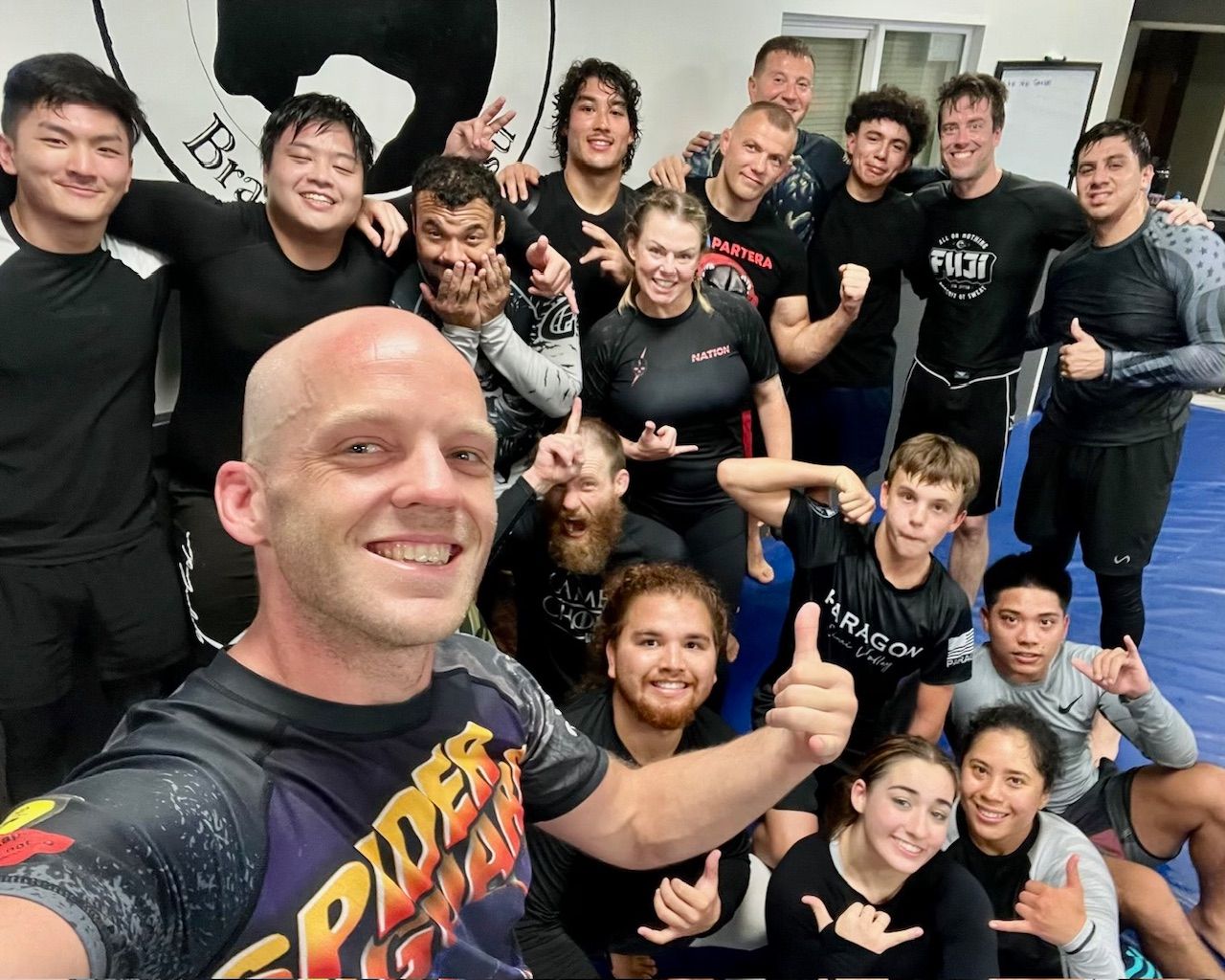
Brazilian jiu jitsu looks like a sport, but it often feels like a full reset for your body, mind, and week.
If you have ever watched a class and thought it was only about submissions and sweat, you are not alone. But in our experience, brazilian jiu jitsu quickly becomes something broader: a training habit that supports your energy, your stress levels, and the way you handle everyday pressure. You come in for a workout and leave with a calmer nervous system and a clearer head, which is not what most people expect from a grappling art.
For many of our students, the biggest changes show up outside the gym. Research backs that up, too. In one large survey of practitioners, 87.6 reported improved confidence, 87.5 reported reduced anxiety, and 100 reported a stronger sense of community. That combination matters, because wellbeing is not just fitness. It is confidence, connection, and the ability to bounce back.
Below are six surprising ways brazilian jiu jitsu in Simi Valley can strengthen wellbeing, plus a few practical ideas for how to get more out of your training once you step on the mats.
Why brazilian jiu jitsu works so well for whole person wellbeing
We train in a way that keeps you engaged mentally and physically at the same time. You are learning movement patterns, timing, and decision-making under pressure, but you are also practicing how to stay relaxed when your heart rate climbs. That mix is rare. Most workouts are either purely physical or purely mental.
Another reason BJJ in Simi Valley fits real life is that training is scalable. You can start as a true beginner, build skill in a structured way, and adjust intensity as your conditioning improves. You do not need to be in shape first. Training is how you get there.
1) Confidence you can actually feel, not just talk about
Confidence is easy to claim and hard to build. The surprising part of brazilian jiu jitsu is that confidence becomes a byproduct of repeated problem-solving. You attempt a technique, it works or it does not, you adjust, and you try again. That cycle happens dozens of times in a single class.
Over time, you start trusting your ability to figure things out. That is why research consistently finds strong confidence gains, with 87.6 of practitioners reporting improvement. It is not a motivational quote. It is skill development, measured in small wins that stack up.
What this looks like in real training
We often see newer students go from holding their breath during drills to moving with more calm and control. That shift carries into work meetings, tough conversations, even driving in traffic. You do not become louder. You become steadier.
2) Stress relief that goes deeper than a quick workout high
Yes, you will get endorphins. But the bigger stress benefit is the way training teaches your body to regulate intensity. Rolling, even light rolling, puts you in a manageable kind of pressure. Your heart rate rises, your brain wants to rush, and you practice staying present anyway.
Physiologically, hard training supports endorphin release and helps regulate stress hormones like cortisol and adrenaline. Practically, it means you learn to downshift. Students often tell us they sleep better on training nights, and the calm lasts into the next day.
A simple tip we share in class
If you feel tense, focus on breathing out longer than you breathe in during transitions. It is a small detail, but it trains the relaxation response while you move, not after.
3) Reduced anxiety and improved mood through controlled challenge
BJJ is challenging, but it is controlled. That is the key. You face discomfort in a safe, supervised environment where tapping is normal and learning is the goal. This creates a powerful feedback loop: you confront stress, you survive it, and you improve.
In the same practitioner survey, 87.5 reported reduced anxiety and 96.9 reported improved mood. That tracks with what we see on the mats. When training is consistent, the mind stops scanning for threats all day because it has a place to process tension and release it.
Why tapping is a wellbeing skill
Tapping teaches a clean boundary. You learn to say no early, reset, and try again without shame. That pattern is surprisingly useful off the mats, especially for people who tend to push past their limits.
4) Community that makes consistency easier
You can have the best workout plan in the world and still quit if you feel isolated. One of the most overlooked benefits of brazilian jiu jitsu is the social structure built into partner training. You learn names, you build trust, you share the awkward beginner phase, and you notice progress together.
Research is blunt on this point: 100 reported a stronger sense of community. That makes sense, because you cannot train alone in the same way. You need partners, and partners need you to show up with respect and attention.
Here is what community support tends to look like over time:
- You start recognizing familiar faces and feeling comfortable asking questions between rounds
- Training partners help you troubleshoot small details, like grip placement or hip angle
- You develop a sense of accountability that feels friendly, not pressuring
- Newer students get welcomed because everyone remembers being new
In a busy Simi Valley schedule, that social glue can be the difference between training twice a month and training two to three times per week.
5) Cognitive benefits: clearer focus, better decisions, less mental clutter
People often call BJJ human chess, but that phrase does not fully capture it. The real cognitive benefit is switching between planning and reacting in real time. You try a pass, your partner counters, you change direction, and you stay aware of position, balance, and timing.
That constant decision-making builds concentration. It also gives your brain a break from the kind of multitasking that drains you. During rounds, you cannot scroll, you cannot half-listen, and you cannot pretend you are paying attention. You are either present or you are stuck.
What we notice in students who train consistently
Focus improves because the brain gets practice doing one thing at a time under mild stress. Many students describe feeling mentally lighter after class, like the noise in their head turns down for a while.
6) Life skills that transfer into work, family, and everyday habits
This might be the most surprising benefit, and it is strongly supported by research. In one study, 96.9 of adult participants reported that discipline, focus, and respect learned in training extended beyond the gym into daily life. That is not a vague claim. That is almost everyone reporting real-world spillover.
In our classes, you practice showing up, listening, and improving one detail at a time. You learn patience because progress comes in layers. You learn humility because everyone taps, including experienced students. You learn commitment because the best way to get better is to train regularly, even when you feel a little tired.
A few transferable skills we see develop quickly:
1. Discipline through routine, because training times anchor your week
2. Mental flexibility, because the best answer changes as your partner changes
3. Emotional control, because frustration does not help you escape a pin
4. Respectful communication, because partners need clear, safe training habits
5. Resilience, because you fail, reset, and try again in the same round
These are not just martial arts values. They are life skills, and they are surprisingly practical.
How we structure training so wellbeing benefits show up faster
Wellbeing is not an accident. It comes from the training environment and the habits you build inside it. We focus on progressive learning, controlled intensity, and a culture where you can ask questions without feeling like you are slowing the room down.
What to expect when you start
We guide you through fundamentals first, because basics reduce injury risk and speed up learning. You will drill techniques with partners, build familiarity with positions, and gradually add resistance. If you are nervous about sparring, that is normal. We introduce live training in a way that matches your comfort level and keeps safety front and center.
A quick note on getting the most from BJJ in Simi Valley
Consistency beats intensity. Two or three manageable sessions per week usually creates better mood, better conditioning, and better skill growth than going all-out once in a while. If your goal is wellbeing, we help you train smart so you can keep training.
Start Your Journey with Paragon Simi Valley
The most surprising part of brazilian jiu jitsu is how quickly it starts improving more than your fitness. When you train regularly, you build confidence that is earned, stress relief that is repeatable, and a community that makes healthy habits easier to keep.
If you are ready to experience BJJ in Simi Valley in a way that supports long-term wellbeing, we would love to help you get started at Paragon Simi Valley with a clear plan, supportive coaching, and a class structure that meets you where you are.
Take what you learned here to the mat by joining a martial arts class at Paragon Simi Valley.